Basement waterproofing for block walls holding back wet Warren County clay
Water reaches a Bowling Green basement the same way almost every time: saturated clay presses against a block wall, and the water finds the joint where wall meets floor, the mortar lines and every crack along the way. The fix is to give it a planned route out.
Read the stains and you can usually tell where the water came in. A wet line along the base of the wall points to the cove joint, the seam where the floor slab was poured against the footing. White, chalky efflorescence on the block shows water moving through the mortar and the hollow cores. A trickle at one spot after every storm is a crack or a pipe penetration. Water rising through the middle of the floor is groundwater pushing up from below. Window wells that fill like buckets are a category of their own. We trace it before we price it, because the right repair for a single leaking crack and the right repair for a wall that weeps along its whole length are very different jobs.
The weather here keeps those leaks busy. Bowling Green averages about 49.7 inches of precipitation a year, with May the wettest month at around 5.6 inches. In early April 2025 more than ten inches fell in roughly four days, and the city's geologist pointed out that wet clay topsoil gets heavier and weaker as it fills with water. In the northwest corridors along Russellville Road and Nashville Road, groundwater sits close to the surface. Saturated clay pushing on a block wall is also what bows it inward over time, which is its own repair; see bowing basement walls.
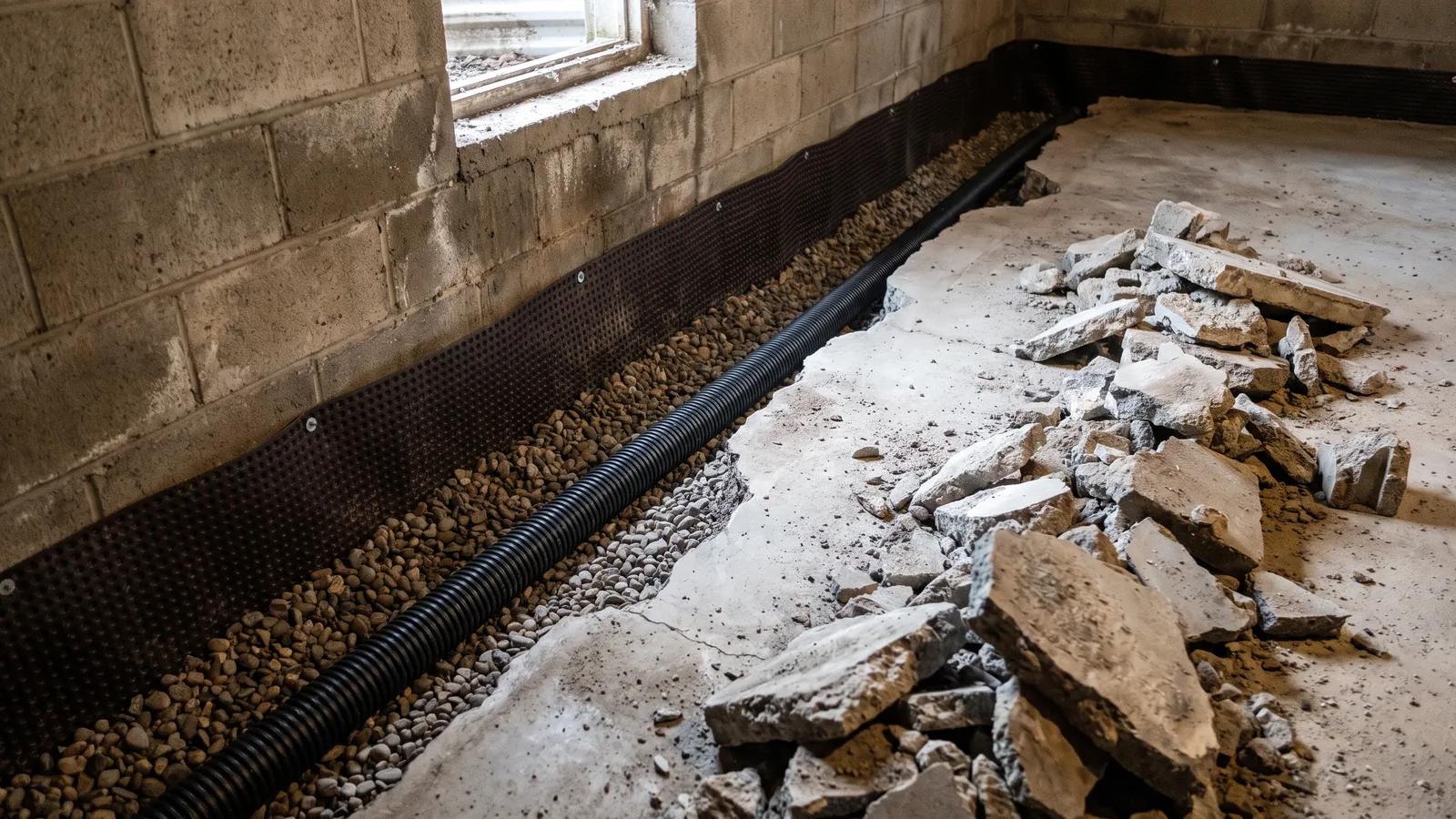
The methods, in the order we usually consider them: sealing individual cracks with epoxy or polyurethane injection; an interior perimeter drain, where the floor is opened along the walls, perforated pipe is laid in washed stone and a dimpled membrane on the wall guides seepage down into it, all of it flowing to a sump pump; and, where the yard allows it, digging the outside of the wall to apply a membrane and lay drain tile at the footing. Coatings painted on the inside face of the block rarely hold back active water by themselves. Fixr puts typical waterproofing projects at $3,000 to $10,000 nationally, with about $5,000 common.
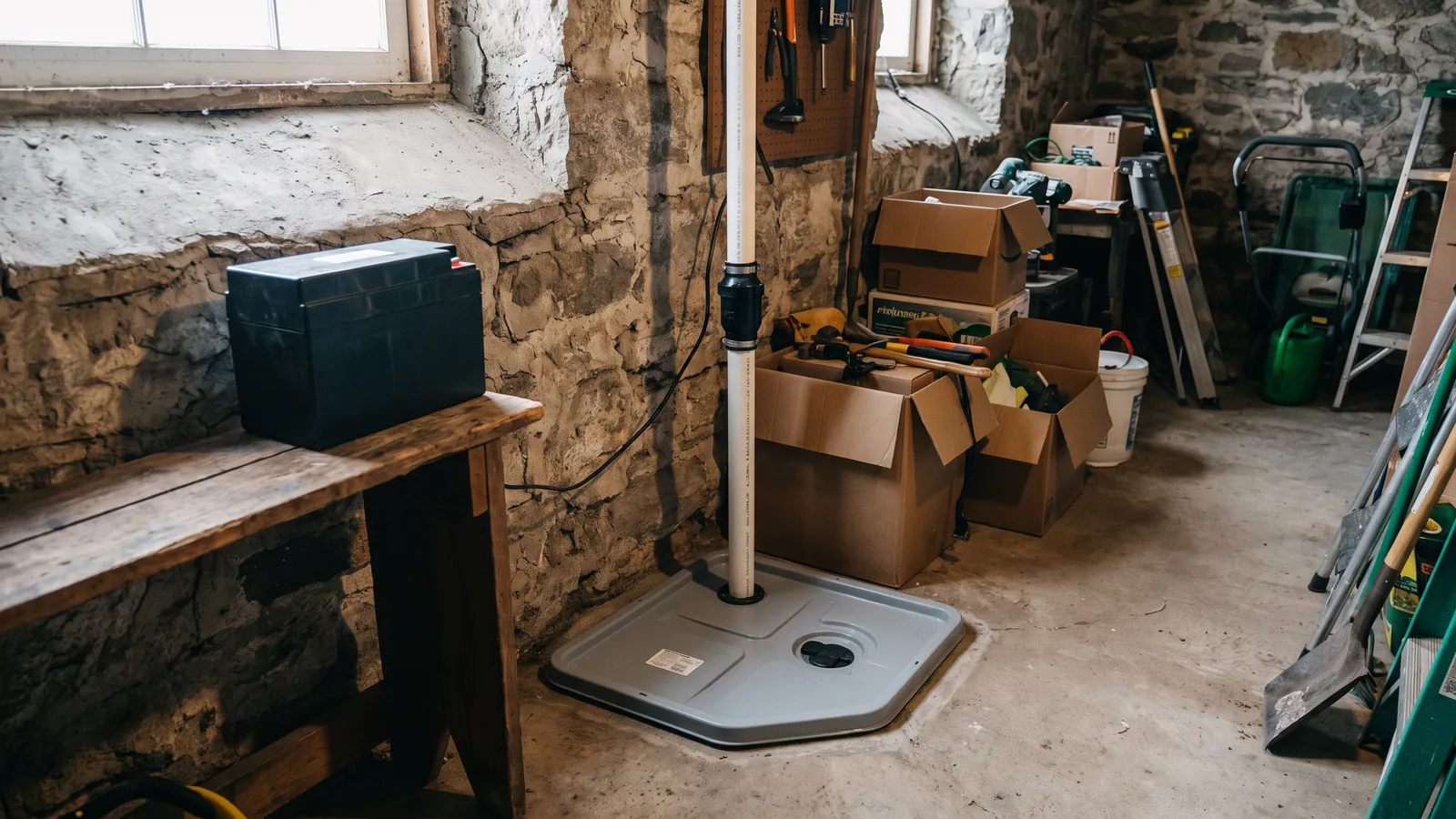
Where the water goes afterward matters more in a karst city than most places. Bowling Green has very few surface streams and sends much of its stormwater underground through drainage wells and improved sinkholes that the EPA classifies as Class V injection wells. Run the sump line to daylight well away from the foundation, and do not pipe it into a sinkhole or drainage well on your own; ask Public Works at 270-393-3628 first. Any outside digging waits for a Kentucky 811 locate.
What the job covers
Leak traced first
Cove joint, mortar and cores, cracks, penetrations, window wells or rising groundwater identified before a method is chosen.
Interior drain done right
Floor opened along the walls, pipe set in washed stone, a dimpled membrane on the block, the slab patched and the line run to a sealed sump.
Cracks sealed for good
Epoxy or polyurethane injection on individual leaking cracks, with the crack's width recorded so movement can be watched.
Outside when it makes sense
Exterior excavation, membrane and footing drain where access, landscaping and depth make it worth the extra digging.
Discharge planned
Sump water carried to daylight away from the house, not into a sinkhole or the city's drainage wells without permission.
Walls checked for movement
Every leaking wall measured for bowing and leaning, since water pressure and wall movement usually travel together.
What basement waterproofing runs here
| Item | Budget range | What moves it |
|---|---|---|
| Basement waterproofing, typical project | $3,000 – $10,000 | Fixr national range; about $5,000 common |
| Interior perimeter drain | $40 – $120 / linear ft | Including membrane and slab patch |
| Exterior French drain at the footing | $10 – $100 / linear ft | Depth and access drive the spread |
| Sump pump installation | $600 – $2,500 | Basin, pump, check valve and discharge |
| Crack injection | $250 – $1,000 per crack | Epoxy or polyurethane |
| Wall anchors or braces if the wall has moved | $2,000 – $7,500 per wall | Today's Homeowner typical range |
Ranges are national figures from Fixr and Today's Homeowner. Your written price follows the inspection and lists each part of the job on its own line.
Which method fits which basement
| Method | Best for | Watch for |
|---|---|---|
| Crack injection | One or two leaking cracks in a poured or block wall that is otherwise dry | Does nothing for seepage along the cove joint |
| Interior drain and sump | Block walls weeping along their length, water at the floor line | Needs a working pump and a sensible discharge |
| Exterior membrane and drain | Reachable walls, new additions, walls that also need outside work | Excavation, landscaping and a utility locate first |
| Interior coating | Damp walls with no running water | Peels when water pressure builds behind it |
What this work looks like
Basement waterproofing: what homeowners ask
Why does my basement only leak after big storms?
Because the clay around it only fills completely after a long or heavy rain. Once it is saturated, water pressure against the wall rises and finds the weakest joint. A basement that stays dry most of the year can still need a drain; it just needs one less often.
Can I just paint the walls with waterproof coating?
On a damp but not leaking wall, a coating can cut down on humidity. Against water actually pushing through block, coatings tend to blister and peel, because the pressure is behind them, not in front.
Is an interior drain as good as digging outside?
For most block basements here, an interior drain and sump handle the water reliably at a lower cost and without tearing up landscaping, driveways or porches. Outside excavation earns its keep when the wall also needs a membrane, when the outside is easy to reach, or when a finished basement makes opening the floor impractical.
Where should the sump pump discharge?
To daylight, well away from the foundation and downhill, where it will not run back toward the house or onto a neighbor. In Bowling Green, do not tie it into a sinkhole or drainage well without asking Public Works first.
Will waterproofing fix the bow in my wall?
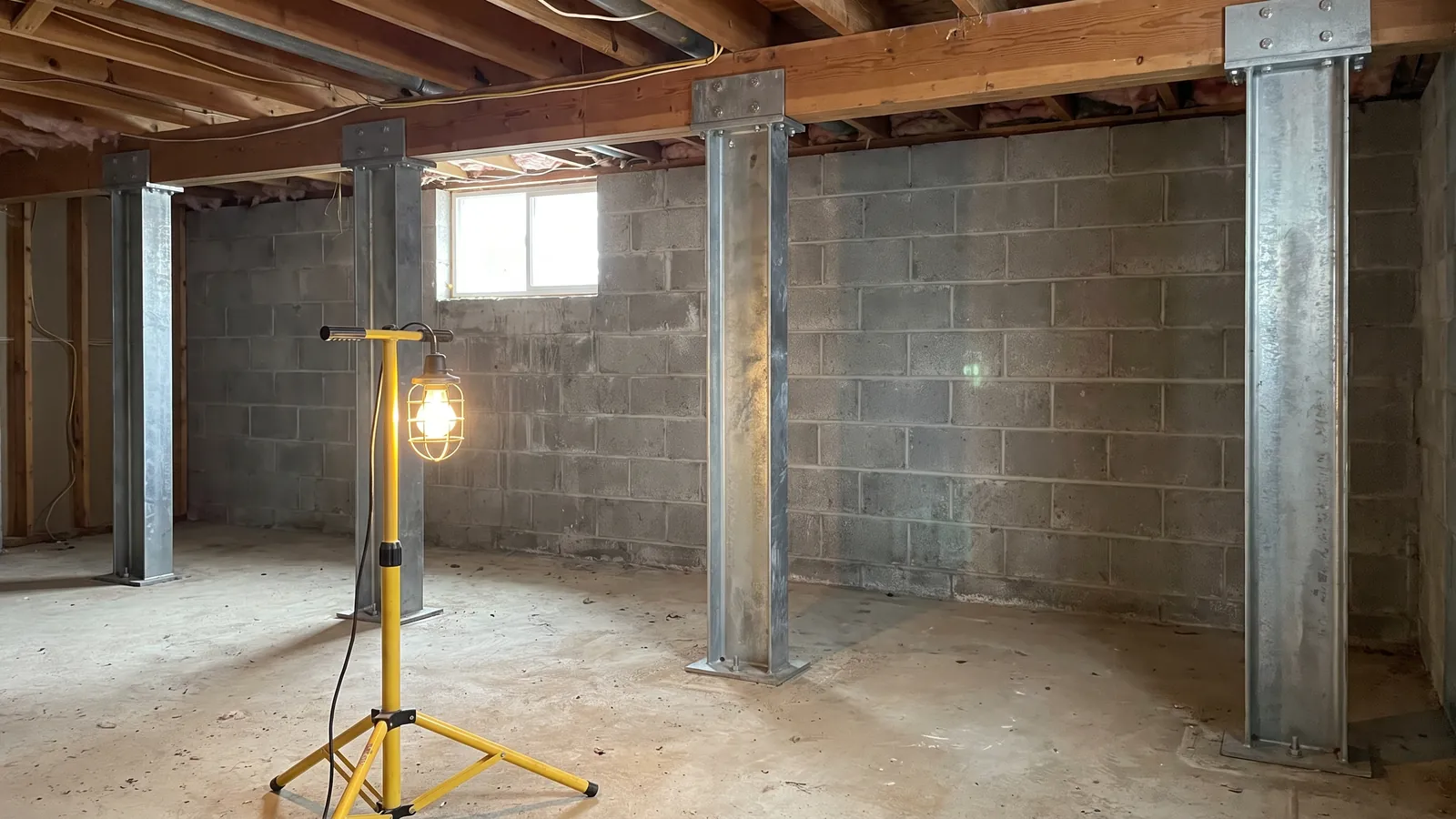
No. Taking pressure off the wall helps keep it from getting worse, but a wall that has already moved needs anchors or braces to hold it. We measure every leaking wall for that while we are there.
Do I need a permit?
Inside city limits, the Building Division's rule covers repair work on a structure, and outside excavation also involves site work and a Kentucky 811 locate. We confirm what the job needs and file it.