What it costs to seal and dry out a crawl space in south-central Kentucky
Encapsulation prices are built from a handful of parts: the liner, the vents, the dehumidifier, any drainage and any repairs to wood that has already gone soft. Here is how each one is priced and which ones are worth paying for.
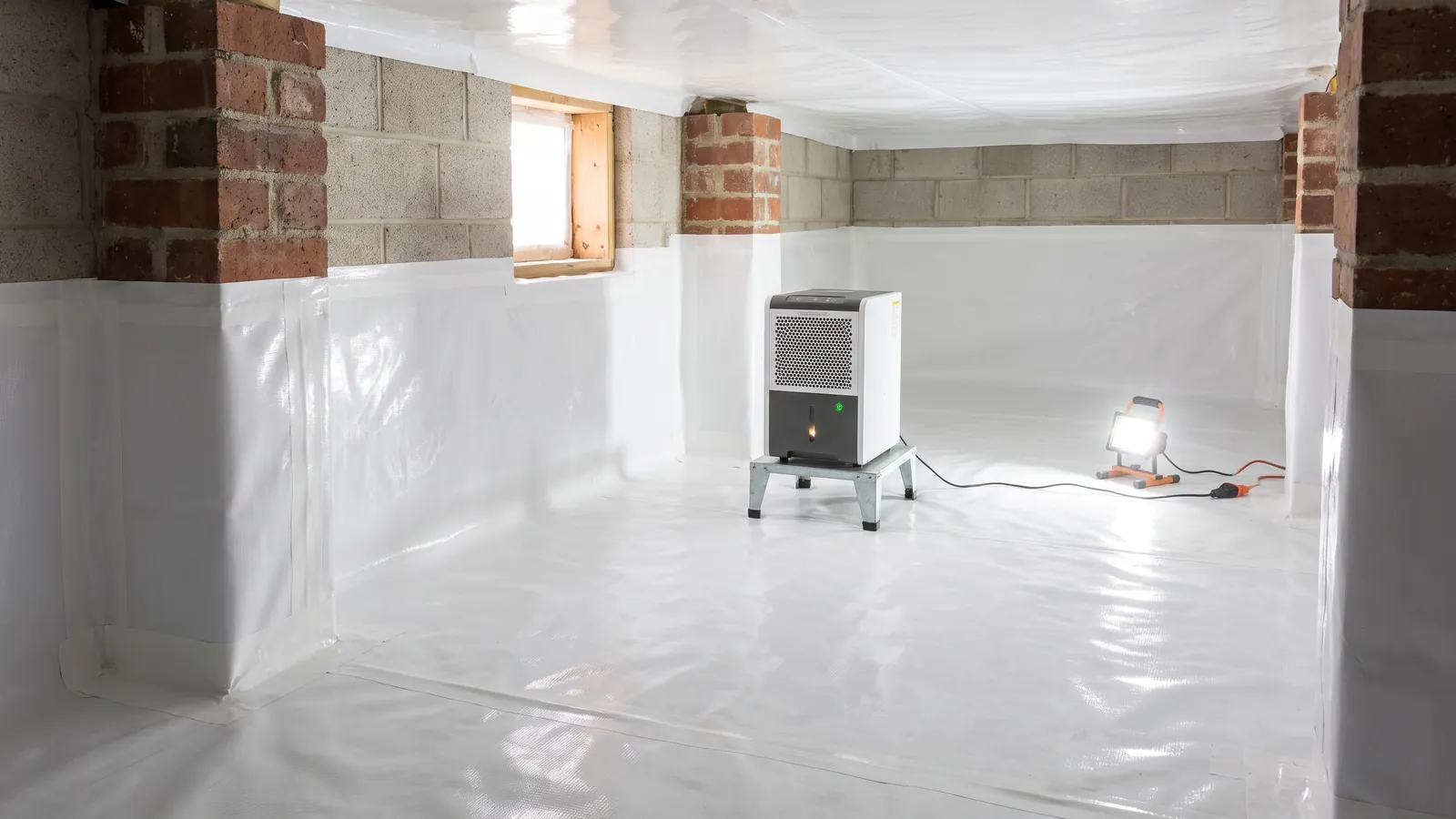
Plenty of houses around Bowling Green sit on crawl spaces, especially the older ones. A vented crawl space in a humid Kentucky summer pulls in warm, wet air that condenses on cooler joists and ductwork. Add clay ground that stays damp after every rain, and the result is the familiar musty smell, sweating pipes, sagging insulation, mold on the subfloor and, eventually, soft wood. Encapsulation closes the space off from outside air and the ground and keeps it dry with a dehumidifier.
Published price ranges
| Item | Range | Source |
|---|---|---|
| Whole encapsulation, typical | $5,000 – $15,000 | HomeAdvisor; national average about $5,500 |
| Basic job, per sq ft | $2 – $4 | HomeAdvisor |
| Extensive job, per sq ft | $3 – $10 | HomeAdvisor and This Old House |
| 20-mil vapor barrier material, per sq ft | $0.50 – $0.70 | HomeAdvisor |
| Crawl space dehumidifier, installed with wiring | $800 – $2,000 | This Old House |
As a rough illustration, a 1,200-square-foot crawl space at $3 to $10 a square foot lands between about $3,600 and $12,000. The low end is a clean, dry, easy-to-reach space that needs a liner and a dehumidifier. The high end has standing water, old insulation to pull out, wood to repair and a tight entry.
The parts, and which matter most
| Part | What it does | Our view |
|---|---|---|
| Reinforced liner | Covers the ground and runs up the walls and piers, seams taped | The heart of the job; thicker liners survive foot traffic and storage |
| Sealed vents and doors | Stops humid outdoor air from entering | Necessary, or the dehumidifier fights the weather all summer |
| Dehumidifier | Holds humidity down year-round | Needed in most Kentucky crawl spaces once sealed |
| Drainage or a sump | Moves water that gets in during heavy rain | Only where water pools; not every crawl space needs it |
| Old insulation removal | Takes out wet, sagging batts | Usually worth it; wet insulation holds moisture against the wood |
| Wood and support repair | Sisters soft joists, adds steel posts | Priced separately on the repair line |
Moisture first, then the liner
If water runs into the crawl space every time it rains, a liner alone becomes a pond liner. Gutters, downspout extensions and grading outside come first, and where the ground still sends water in, a perimeter drain to a sump goes in under the liner. We price those items separately so you can see why they are there.
A word on radon
The Kentucky Geological Survey notes radon is a concern on the sinkhole plain, with about 60 percent of measured values in one rock unit above the EPA limit. A sealed liner can be part of a radon system, but it is not one by itself. Test the house; if the reading is high, radon mitigation is designed and priced as its own job.
Comparing encapsulation quotes
- Ask for the liner's thickness in mils and whether it is reinforced. Two quotes for "a vapor barrier" can describe very different materials.
- Check that the liner runs up the walls and wraps the piers, not just across the dirt.
- Look for how vents, the access door and any foundation gaps get sealed.
- Find the dehumidifier on its own line, with its capacity and where its condensate drains.
- See whether wood repairs, insulation removal and drainage are priced or left as surprises.
What a finished crawl space looks like
Walk-through clean: a bright liner with taped seams, no daylight at the vents, a dehumidifier running quietly on a stand, ductwork and pipes dry to the touch, and no smell coming up through the floor. We leave a hygrometer reading so you can see the humidity number for yourself, and we show you how to check it after a wet week.
Questions readers send us
Is a thicker liner worth the extra money?
If you store things in the crawl space or anyone will crawl through it for service, yes. Thin liners tear, and a torn liner lets moisture back in.
Do I need a dehumidifier after sealing?
In most Kentucky crawl spaces, yes. Sealing stops new humid air, but the space still needs something holding the humidity down through summer.
Will encapsulation fix sagging floors?
No. It stops the moisture that softens wood. Sagging floors need supports and leveling, priced separately.
How long does the job take?
A typical crawl space is a few days, longer if insulation comes out or wood needs repair.
Does it lower energy bills?
Many homeowners notice floors above feel less clammy and the house holds temperature better, but savings depend on the house. We do not promise a number.
Keep reading: Crawl space encapsulation · Crawl space repair · Sump pumps · Repair cost guide