French drains and yard drainage that move water before the clay soaks it up
Most foundation trouble in Warren County begins as a drainage problem: a downspout emptying beside the wall, a yard that tilts toward the house, a low corner that stays soggy for days after rain. Fix that, and many of the bigger repairs never come.
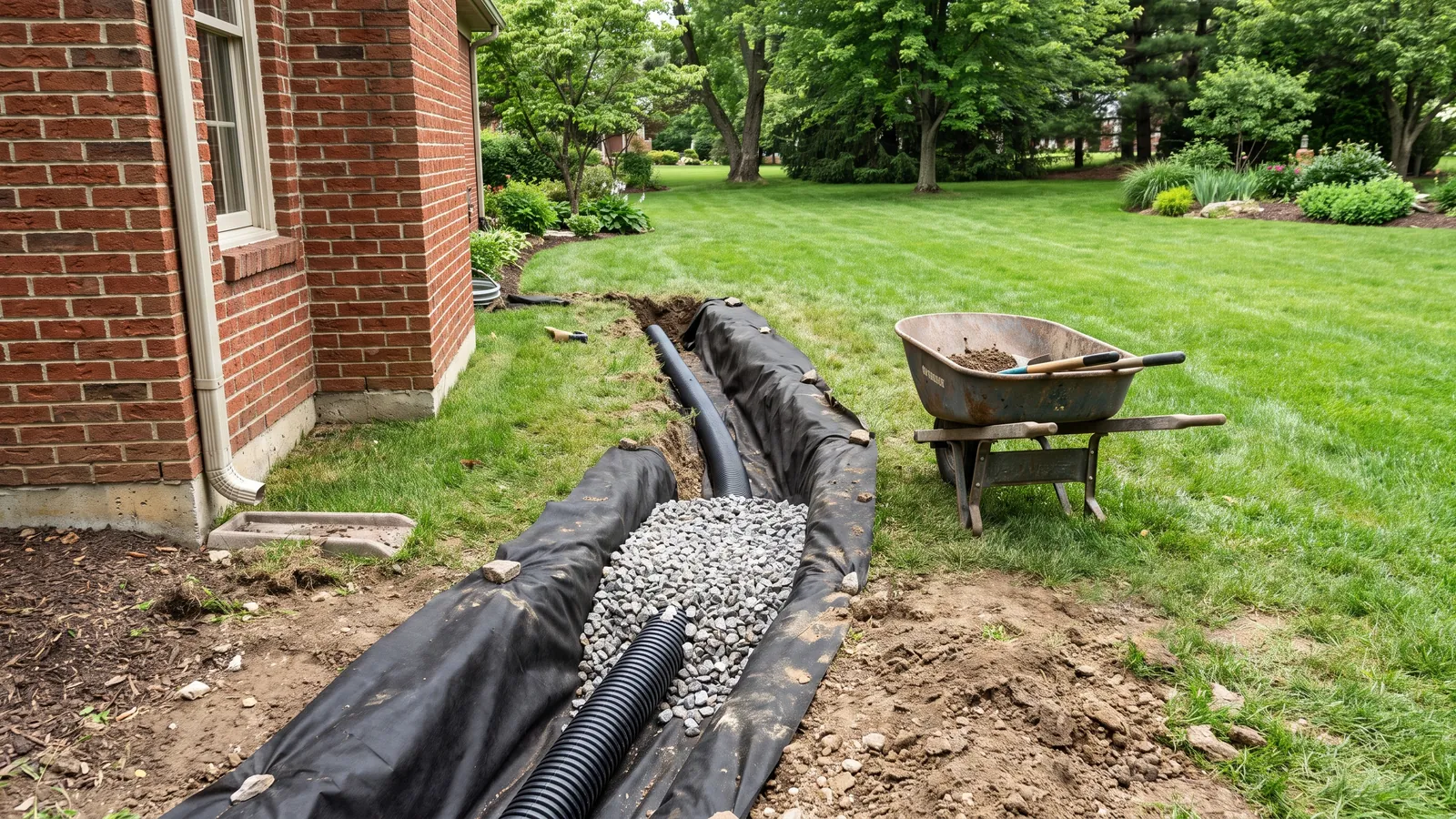
A French drain is a simple idea built carefully: a trench lined with filter fabric, a perforated pipe set in washed stone, the fabric folded over the top and the trench backfilled, so water that soaks into the ground finds the stone before it finds your foundation and is carried off to a safe outlet. A curtain drain set uphill of the house intercepts water running toward it across a slope. Downspouts get their own solid pipe, buried and run out to daylight, because a French drain is meant for groundwater, not the hundreds of gallons a roof sheds in one storm. Sometimes the right answer is not a drain at all but regrading, so the first few feet of ground around the house fall away from the wall instead of toward it.
Clay is the reason this matters so much here. Warren County's soil takes water in slowly and lets it go slowly, so a puddle against the foundation does not just run off; it soaks in and stays, swelling the clay against the wall and softening the ground under the footing. The Kentucky Geological Survey also notes that water moving down through the soil can carry it into voids in the limestone below, which is how slabs and footings settle over time on the sinkhole plain.
Where the water ends up is the other half of the design. Bowling Green has very few surface streams; the city leans on its caves for drainage and moves stormwater underground through drainage wells and improved sinkholes, which the EPA classifies as Class V injection wells. A yard drain that dumps silt into one helps clog it, and dumping sediment, grass clippings and similar material into the system violates the City's Illicit Discharge Ordinance. We plan outlets to daylight on your own lot, slowed and spread so they do not wash out the neighbor's yard, and we ask Public Works before going anywhere near a drainage well.
Digging has rules. Kentucky 811 must be notified at least two and no more than ten full working days before excavation starts. Inside city limits, the City's Site Work Permit covers excavation and grading; its homeowner page lists small excavation under 350 square feet as possibly not needing a permit, while clearing more than 350 square feet calls for grade, slope and elevation plans. We file the locate and confirm the permit question before the first shovel goes in.
What the job covers
Water traced across the lot
Where the roof sheds, where the yard slopes and where the soggy spots sit, mapped before any trench is laid out.
Fabric, stone and pipe
Trenches lined with filter fabric, perforated pipe bedded in washed stone and wrapped, so the drain keeps working instead of silting shut.
Downspouts kept separate
Roof water carried in solid buried pipe to daylight, not dumped into the French drain meant for groundwater.
Outlets that behave
Water released on your lot, downhill and spread out, never into a sinkhole or drainage well without the City's approval.
Locate and permit first
Kentucky 811 notified 2 to 10 full working days ahead, and the City's site work rules checked for the size of the job.
Yard put back
Trenches backfilled and seeded or covered, and the final grade checked so water still falls away from the house.
French drain and drainage costs in Bowling Green
| Item | Budget range | What moves it |
|---|---|---|
| Exterior French drain | $10 – $100 / linear ft | Fixr national range; depth and access set the spread |
| Interior perimeter drain (basement side) | $40 – $120 / linear ft | When water is already getting inside |
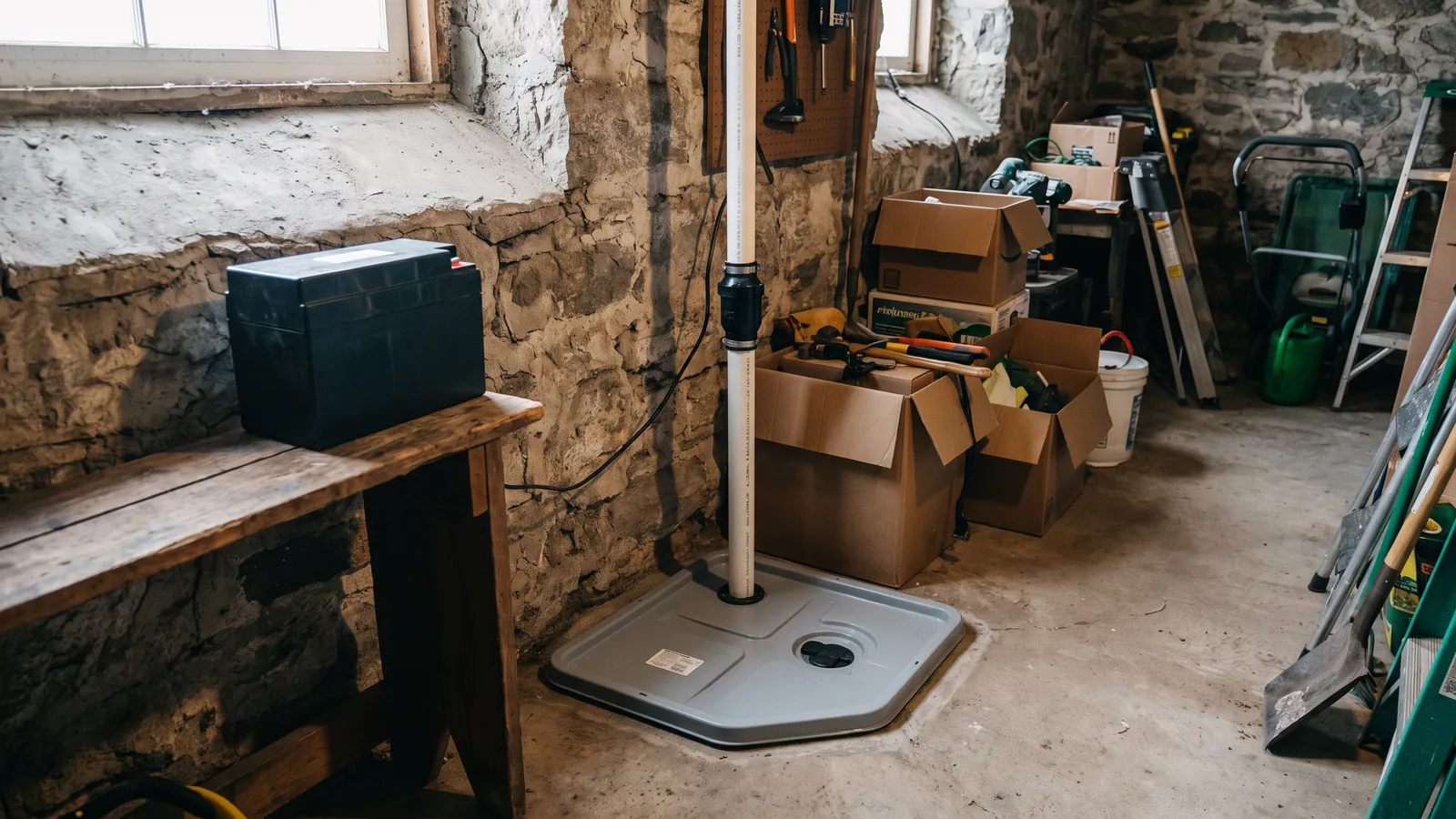
| Sump pump with discharge line | $600 – $2,500 | Where the drain needs a lift to reach daylight |
| Buried downspout lines and regrading | Quoted on site | Depends on run length and the slope of the lot |
| Kentucky 811 locate | Filed by us | 2 to 10 full working days before digging |
Per-foot figures are Fixr's national ranges. Yard drainage depends on the length of the run, the slope of the lot and what is in the way, so your price is written on site after we walk the property.
What this work looks like
French drains and yard drainage: what homeowners ask
Do I need a French drain or just better gutters?
Start with the gutters and downspouts. A surprising number of wet crawl spaces and leaking basements dry up once roof water is carried ten feet or more from the wall in solid pipe. If the ground stays wet after that, or water runs toward the house across the yard, a French drain or curtain drain is the next step.
Can the drain go into the sinkhole in my back yard?
Not without asking. Sinkholes and drainage wells in Bowling Green are part of the city's stormwater system and are regulated as Class V injection wells. Silt from a yard drain clogs them, and dumping material into them breaks the City's Illicit Discharge Ordinance. Call Public Works at 270-393-3628 before tying anything in.
Do I need a permit to put in a French drain?
Small jobs often do not, but inside city limits the Site Work Permit covers excavation and grading, and larger clearing needs grade and elevation plans. Outside the city, the local building office decides. We check for your address and file whatever is needed.
How deep does a French drain go?
Deep enough to catch the water it is meant for. A curtain drain catching surface runoff can be shallow; one meant to lower water near a basement footing goes much deeper. We set depth by where the water is, not by a standard number.
Will a French drain clog?
Any drain that carries silt eventually will. Fabric wrapping, washed stone and a cleanout at the upper end keep it working for a long time, and keeping roof water out of it helps most of all.
Why call a foundation company for drainage?
Because drainage is the cheapest foundation repair there is. We look at the yard knowing what wet clay does to walls and footings, and we will tell you when drainage alone should be enough.