Steel push piers driven until the rock under Bowling Green says stop
When a footing has lost the soil beneath it, the answer is to reach past the soft ground to something that will not move. On this side of Kentucky that is usually limestone, and it is rarely at the same depth twice.
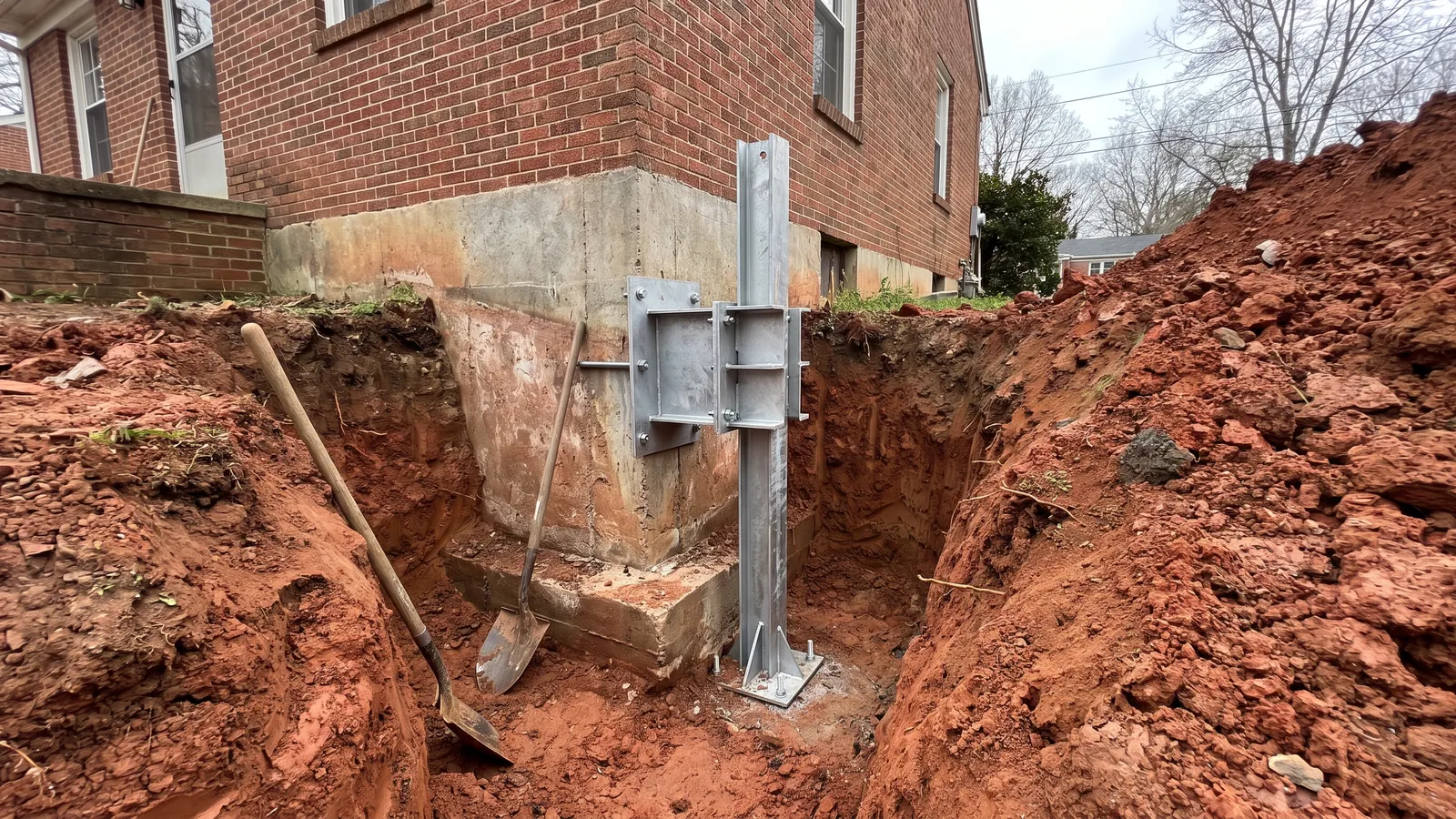
A push pier is a steel tube driven straight down beside the footing, using the weight of the house as the counterforce. A bracket is fastened under the footing, a hydraulic ram presses section after section of pier into the ground, and when the pier meets rock or soil firm enough to stop it, the load of that part of the house transfers onto the pier. With several piers set along a settled wall, the ram can then raise the footing as far as the house allows, and each bracket is locked off.
On karst, the interesting part is how deep the pier goes. The limestone under Bowling Green is not a flat floor. It weathers into ridges and slots filled with clay, so one pier may reach rock at a modest depth while the next, five or six feet along the wall, keeps going. That is exactly why push piers suit this ground: every one is driven until it proves itself, and the depth and the pressure at refusal are recorded for each pier. A design that assumed one depth for the whole house would be guessing.
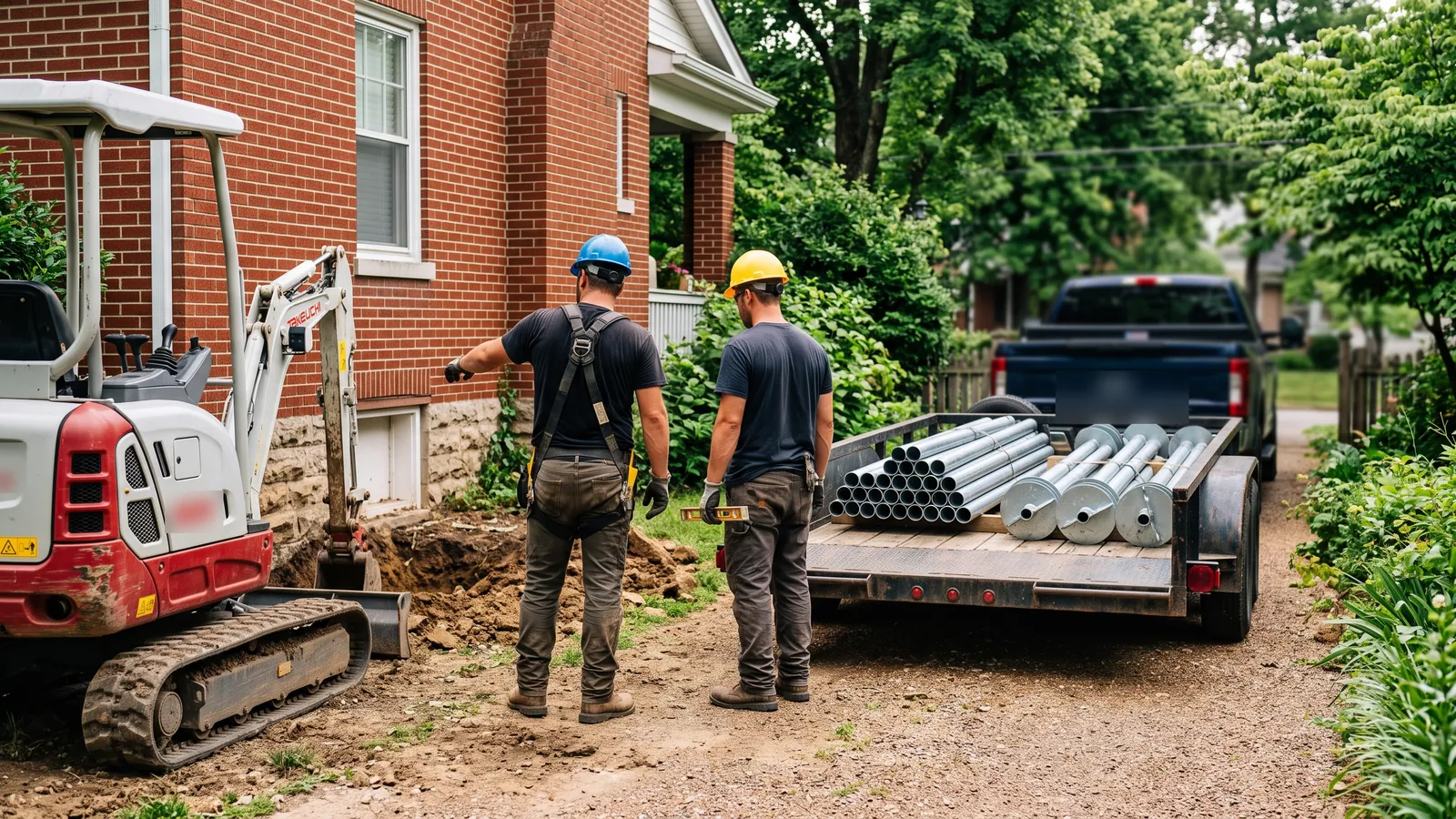
The work begins with a small excavation at each pier location along the outside of the footing; now and then we work from inside a basement instead. Before any digging we request a Kentucky 811 locate, which state law requires two to ten full working days ahead, and inside city limits we pull the Building Division permit and post it. After the piers are set and the house is lifted and locked, the holes are backfilled and compacted, and you receive a pier log listing each location, depth and final pressure.
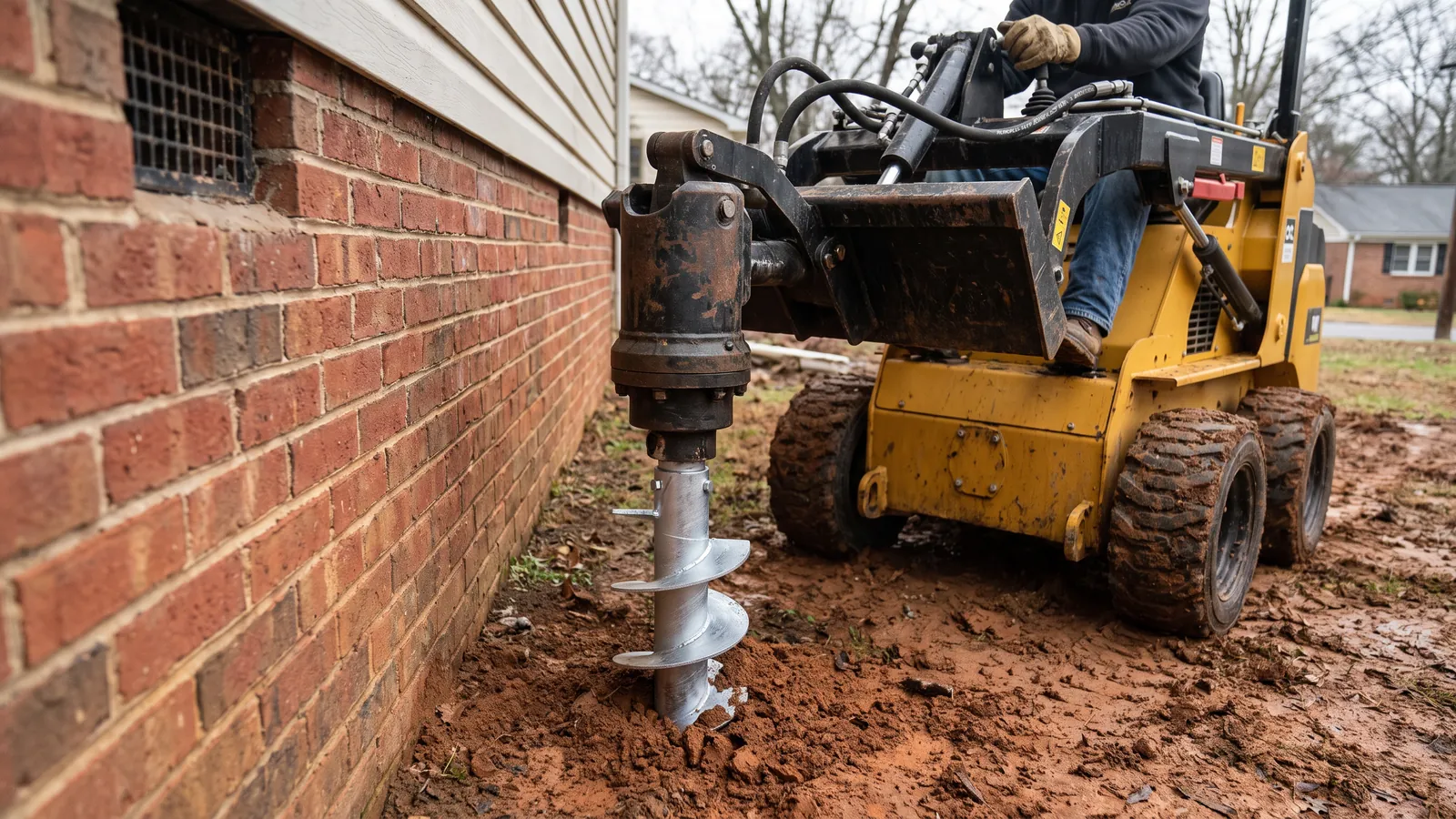
Push piers are not the answer to everything. They need a structure heavy enough to drive against, so a porch, a light addition or an interior slab usually gets helical piers instead. And if water is what carried the soil away, the drainage still needs fixing, or the next corner will follow.
What the job covers
Driven to refusal
Each pier pushed until it meets rock or firm bearing, using the weight of the house as the reaction force.
Depth logged pier by pier
Location, depth and final pressure recorded for every pier and handed over with the job paperwork.
Lifted where the house allows
Settled footings raised in stages while the drywall, brick and doors are watched, then locked off.
Coated steel
Steel pier sections and brackets with a protective coating, set beneath the footing and out of sight.
Permit and 811 first
City permit posted inside Bowling Green and a Kentucky 811 locate requested before the first hole.
Yard put back
Holes backfilled and compacted, and plantings near the work area set aside and replaced where possible.
What push pier installation costs around Bowling Green
| Item | Budget range | What moves it |
|---|---|---|
| Steel push pier, each | about $1,500 | Today's Homeowner national figure |
| Push pier project, typical | $9,000 – $15,000 | Most jobs need several piers |
| Piers of all types, each | $1,000 – $3,000 | Fixr national range |
| Interior pier through a basement slab | Quoted per location | Slab cut and patched |
| Permit | Its own line | City of Bowling Green, where required |
These ranges come from national cost guides and are here to help you plan. Your own number is written up after the free inspection, with each pier, anchor, post or foot of drain on its own line, and nothing is dug until you approve it.
What this work looks like
Push pier installation: what homeowners ask
How many piers will I need?
Enough to carry the settled section at a spacing the footing can span, spaced along the affected wall to suit the footing. One corner might take three or four; a whole side of a house can take many more. The inspection sets the number.
How deep do the piers go?
As deep as it takes to reach rock or firm bearing. On the karst around Bowling Green that varies a great deal between neighboring piers, which is why each one is logged.
Will my house go back to level?
Often close to it. We lift slowly and stop when the house says so, because walls and pipes that have lived with settlement for years can crack if pushed too far. You will know the target before we start.
What if a pier never hits rock?
It still reaches a depth where the soil resists the full load we drive it with, which is the whole point of the method. If the readings or the ground suggest a void, we stop and talk about engineering before going further.
Can piers stop a sinkhole?
Piers can carry a house past soft soil and over a small void to rock. A large or active sinkhole is a different problem that may need engineered grouting first. See sinkhole repair.
How much mess is there?
Each pier needs a hole beside the footing. Shrubs in the way are lifted and set aside where possible, and the soil goes back compacted. Expect some disturbance for a few days.