Foundation crack repair that reads the crack before it fills it
A crack is a record of how the house moved. Its shape, width and direction tell us whether to seal it, reinforce the wall, or fix the support underneath first.
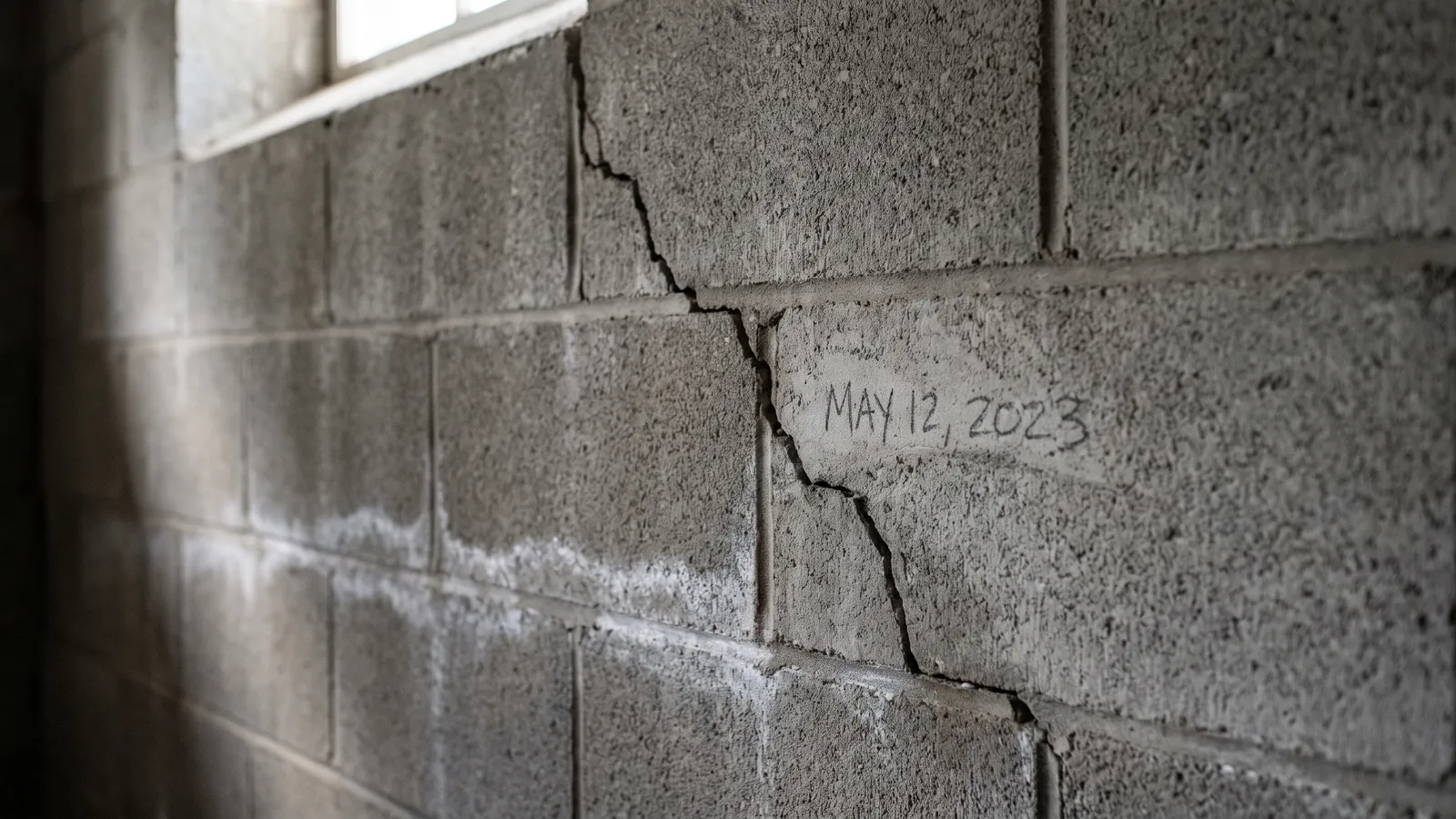
Most houses around Bowling Green have cracks somewhere, and most are not emergencies. Concrete shrinks as it cures, so a poured basement wall often carries a few thin vertical cracks that never move again. Block walls and brick veneer behave differently. They are built from small units held together by mortar, and when one part of the house moves more than another, the mortar gives first. That is where the stair-step pattern comes from, and on clay that swells and shrinks with the seasons it is the crack we are asked about most.
Direction tells the story. A stair-step crack climbing up and away from a corner usually means that corner has dropped. A horizontal crack partway up a block basement wall means soil pressure from outside: the wall is bending, and filling the crack will not stop it, which makes it a bowing wall repair. A crack wider at the top than at the bottom points to settlement at one end of the wall. A crack with water seeping through is also a leak, and the fix has to handle both jobs.
When the crack itself is the problem, we seal it. Epoxy injection bonds the two faces of a poured-wall crack back together and restores its strength. Flexible polyurethane injection is the better choice when the aim is to stop water, because it expands into the crack and stays slightly elastic as the wall moves through the seasons. On block walls we repoint failed mortar, or reinforce the wall with carbon fiber or steel when the crack shows real movement. And when the crack is a symptom of a settled footing, the footing gets piers first and the crack is sealed second.
Not sure whether a crack is still growing? We can fix a crack gauge across it and come back after the next wet season. A crack that has not moved in a year often needs nothing more than a seal.
What the job covers
Every crack measured
Width at both ends, length, direction and any offset recorded with photos, so the repair fits the movement.
Epoxy for strength
Poured-wall cracks bonded with epoxy pumped in through surface ports, curing stronger than the concrete beside it.
Polyurethane for leaks
Flexible foam injected into wet cracks, staying sealed as the wall moves through a Kentucky year.
Block and brick work
Stair-step cracks repointed, and walls that show movement reinforced with carbon fiber or steel.
Cause fixed first
A settled corner is supported before its cracks are filled, so next spring does not reopen the seal.
Monitoring when in doubt
A gauge set across the crack and read again after the wet season, for cracks that may have already stopped.
What foundation crack repair costs around Bowling Green
| Item | Budget range | What moves it |
|---|---|---|
| Epoxy or polyurethane injection | $250 – $1,000 | Per crack, Fixr national range |
| Simple crack sealing | from about $200 | Short, dry, easy-to-reach cracks |
| Carbon fiber reinforcement | $4,000 – $12,000 | Per project, by wall length |
| Steel or carbon fiber straps | $85 – $275 per ft | Usually spaced about every 4 ft |
| Crack gauge and follow-up visit | Included | Part of the free inspection |
These ranges come from national cost guides and are here to help you plan. Your own number is written up after the free inspection, with each pier, anchor, post or foot of drain on its own line, and nothing is dug until you approve it.
What this work looks like
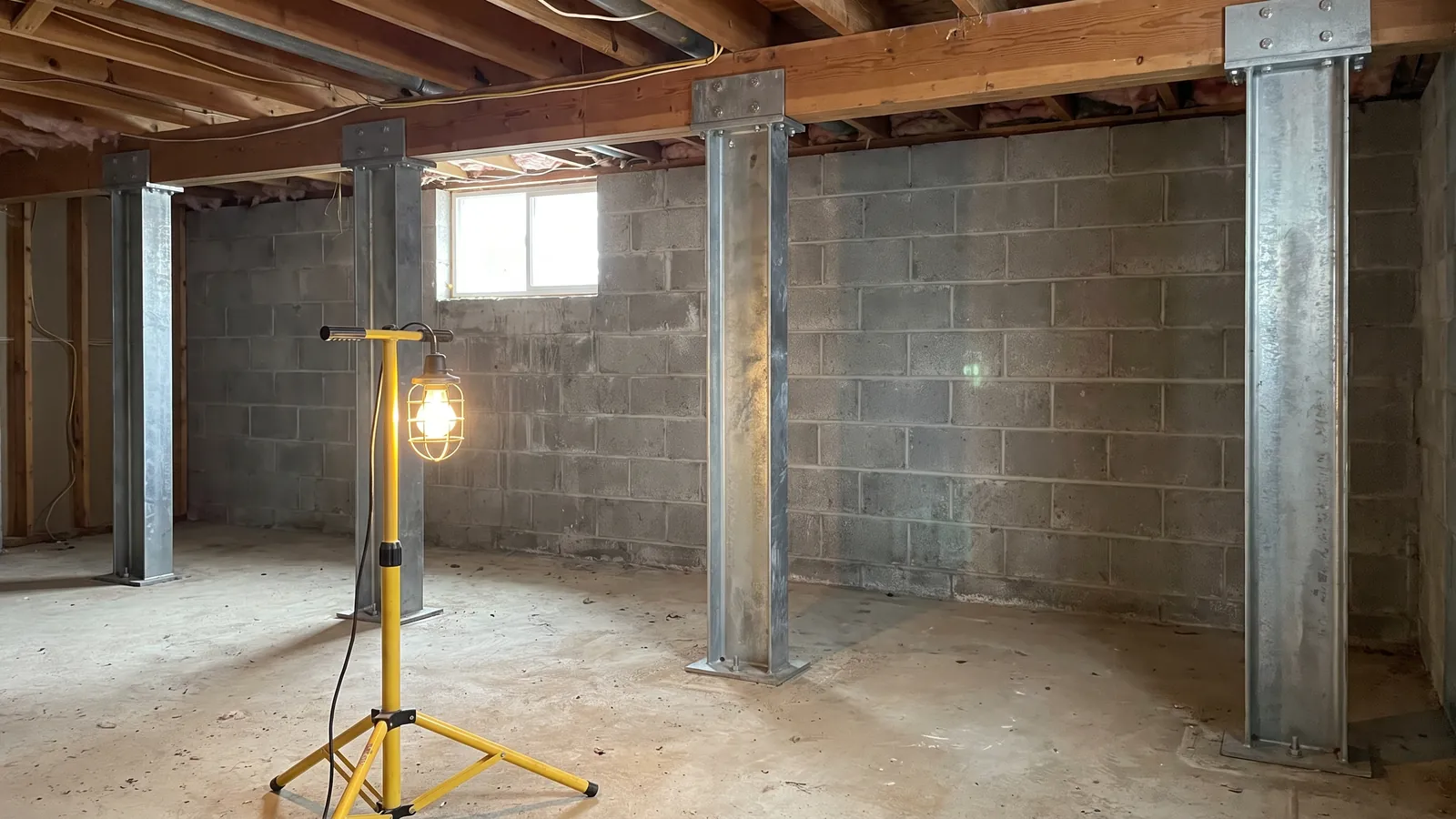
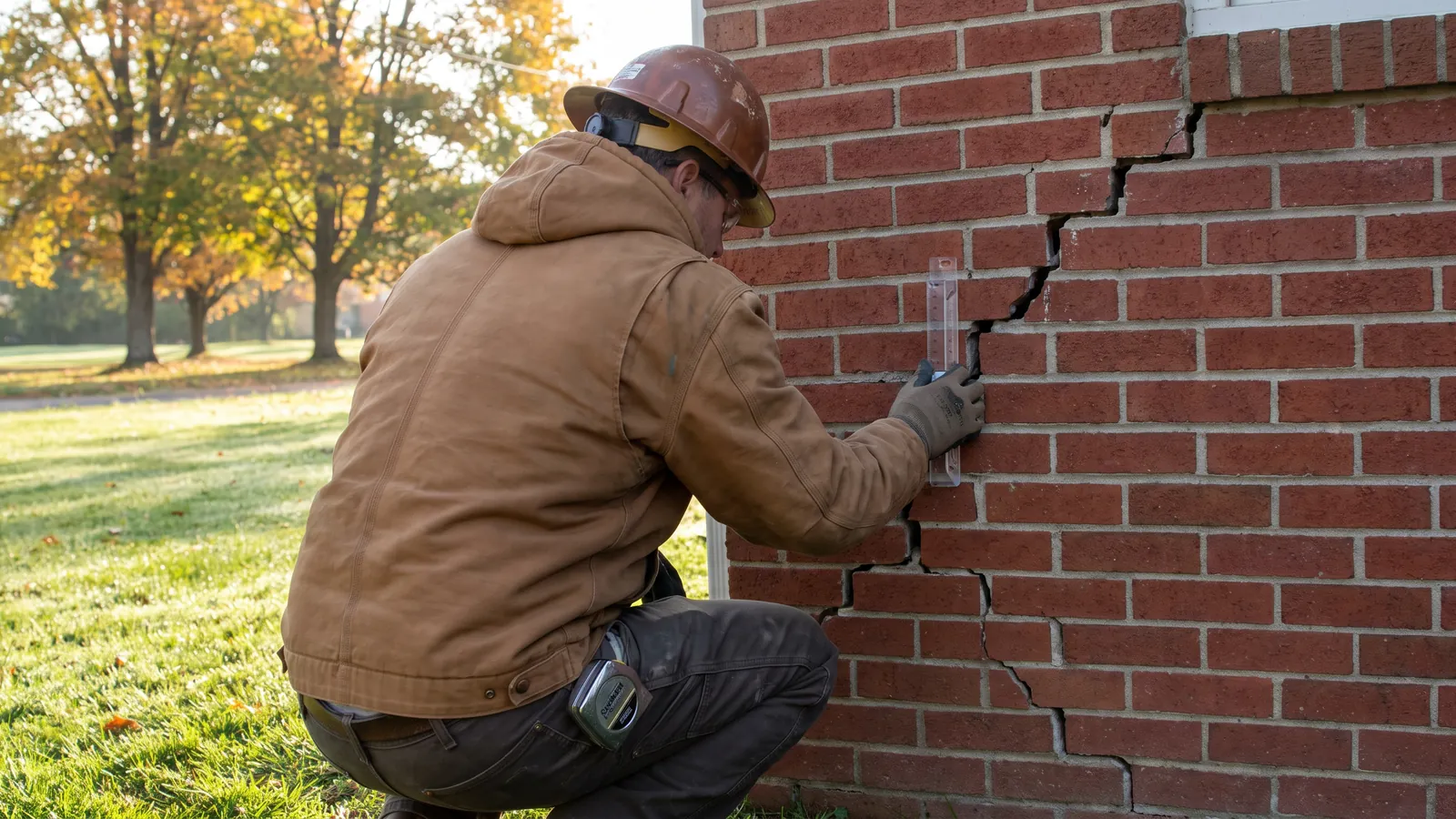
Foundation crack repair: what homeowners ask
Are stair-step cracks normal?
They are common here, but common is not the same as harmless. A thin stair-step crack that has not changed in years may only need repointing. One that is widening, or that shows blocks sliding out of line, means the wall or the footing is moving.
What about horizontal cracks?
Take them seriously. A horizontal crack in a block basement wall, usually a few feet below the top, means soil outside is pushing the wall inward. Sealing it only hides the problem; the wall needs anchors or bracing.
Can I seal cracks myself?
Cosmetic hairlines, yes, with a masonry sealant. A store-bought patch over a structural crack just hides the movement and makes the crack harder to read later, so have it looked at first.
Why did the crack come back?
Because something is still moving it. A crack sealed over a settling corner or a pressured wall will reopen. The movement has to be fixed first.
Do drywall cracks mean foundation trouble?
Sometimes. Cracks running from the corners of doors and windows, doors that stick, and gaps where walls meet the ceiling can all follow settlement. They can also be ordinary seasonal movement in the framing. Measuring the floors tells us which.
Does crack repair need a permit?
Sealing a crack usually is not structural work. Reinforcing a wall or supporting a footing is, and inside Bowling Green city limits it goes through the Building Division. We tell you which kind of job yours is before we start.