A free foundation inspection that measures first and recommends second
Most people call because they noticed something: a crack that looks wider than last year, a door that started sticking, a floor that suddenly feels downhill. The inspection turns that worry into measurements, a likely cause and a plain answer about whether anything needs doing yet.
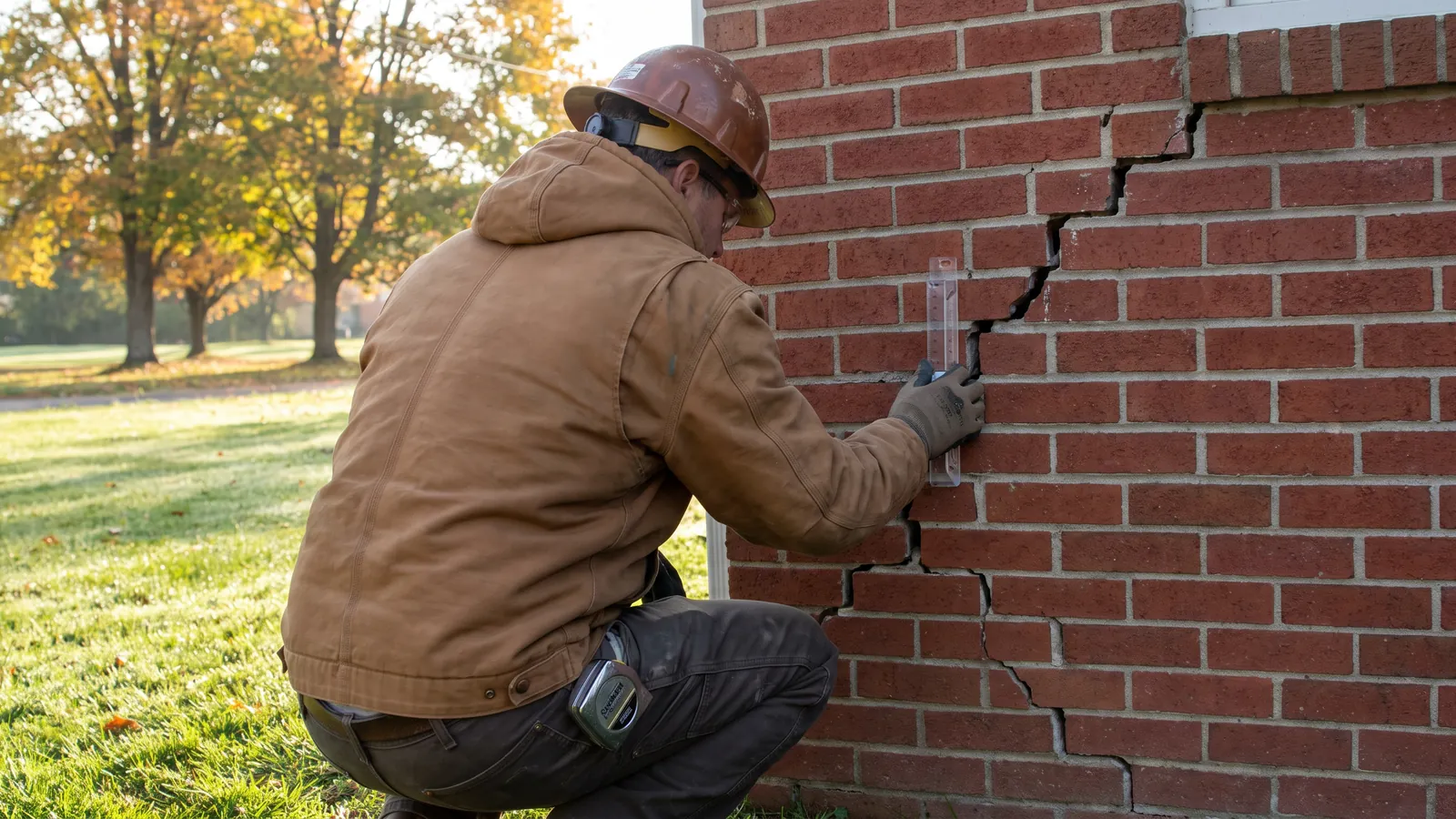
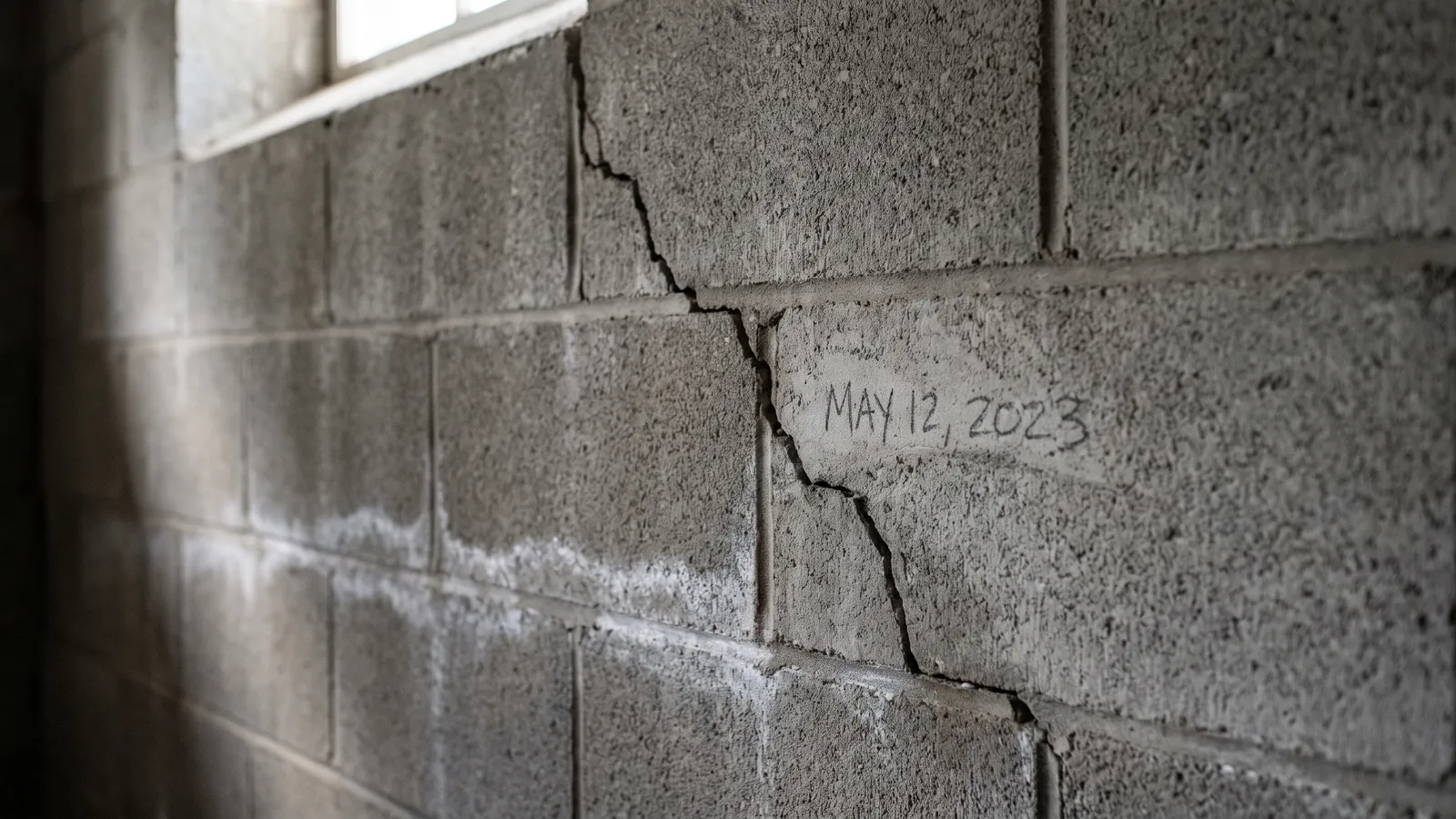
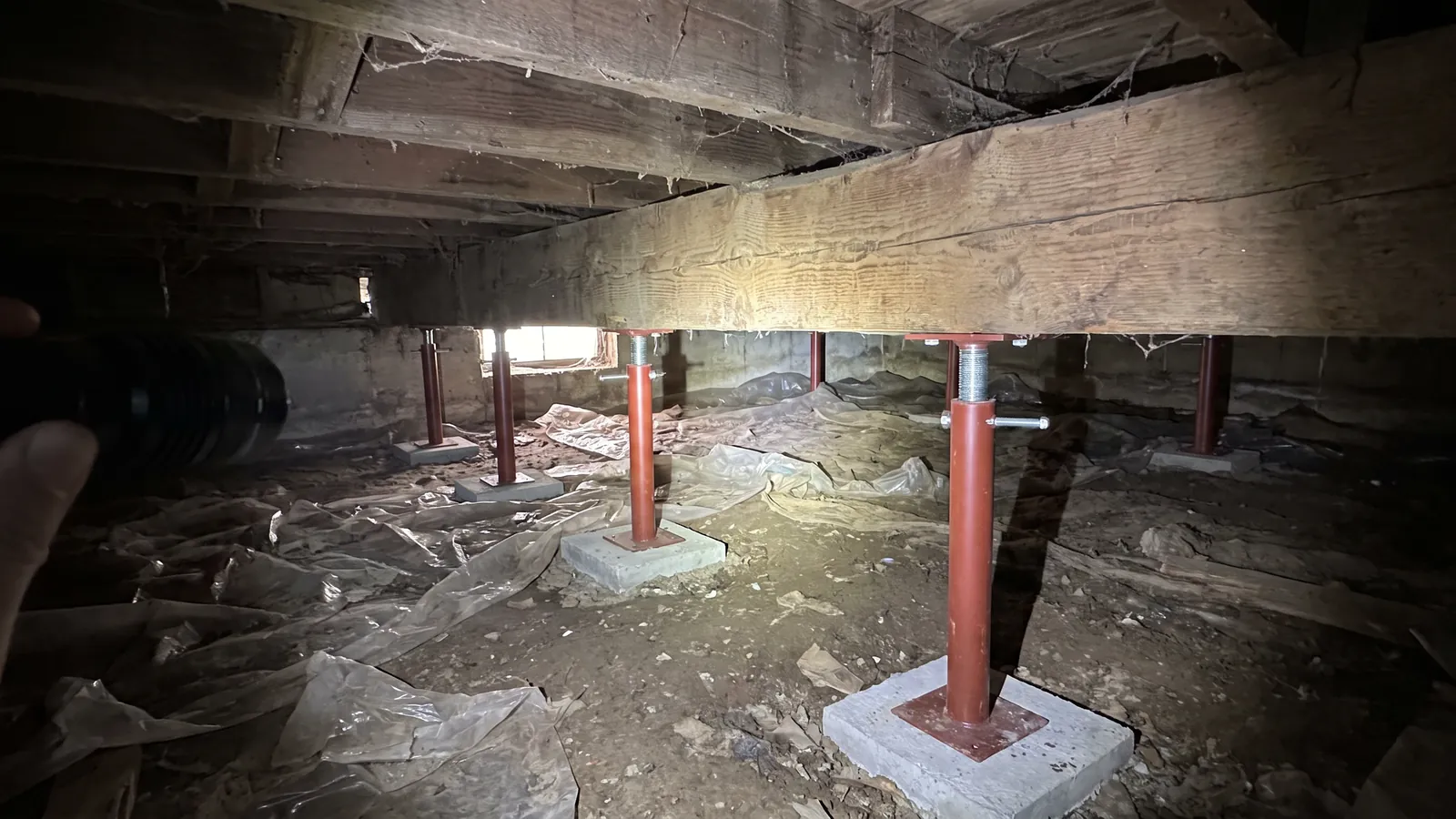
Outside, we walk the whole house: brick and block for stair-step and vertical cracks, gaps between window frames and the masonry, the chimney's relationship to the wall, the grade of the soil around the foundation and where every downspout empties. Inside, we try the doors and windows, look at drywall and plaster around openings, and take floor elevations across every room with a laser level, so a slope can be stated in fractions of an inch rather than a feeling. Cracks get measured with a gauge. In the basement or crawl space we check walls for plumb and bow, read moisture levels in the air and the framing, look at what the piers and posts stand on, and note any standing water or soil washing in.
What you get afterward is a written summary with photos and the numbers: the widest crack, the high and low points of the floor, how far a wall is out of plumb, the humidity under the house. It says what we think is causing it, in the context of the ground here, and what we would do about it with a price for each part. Sometimes the honest answer is that nothing needs repair right now. Then we tell you what to watch, and we can leave a crack monitor in place so you can see for yourself whether a crack is moving through the seasons.
A few things to be clear about. We are a foundation repair company, not a licensed home inspector and not a structural engineer. When a problem calls for an engineer's design, a large sinkhole near the house, a lender or insurer asking for a sealed report, or a disagreement over what went wrong, we say so and suggest you bring one in. The Kentucky Geological Survey notes that proper site evaluation on karst includes geophysical studies and core sampling; that is engineering work for new construction and serious subsidence, not something a repair inspection replaces.
Good times to book: after a wet spring when a crack appears or grows, before you list a house, during a purchase while you can still negotiate, or simply when a house built in the 1980s or 90s starts showing its age. Bowling Green's median home was built in 1991, which puts a lot of houses squarely in that window now.
What the job covers
Floor elevations
A laser level reading in every room, so a sloping floor is a number on paper instead of a marble rolling across the kitchen.
Cracks measured
Widths read with a gauge and photographed, inside and out, so later visits can show whether anything has moved.
Walls and supports
Basement walls checked for bow and plumb; crawl space piers, posts and girders checked for what they are standing on.
Moisture readings
Humidity in the crawl space or basement and moisture in the framing, plus where gutters and grading are sending water.
Written findings
Photos, measurements, the likely cause and a priced plan, or a clear note that nothing needs doing yet.
Engineer when warranted
We say plainly when a job needs a structural engineer or geotechnical work instead of a repair estimate.
What an inspection costs
| Item | Budget range | What moves it |
|---|---|---|
| Foundation inspection and written findings | $0 | No charge, no obligation |
| Crack monitor left in place | Included | When watching beats repairing |
| Repair plan and itemized price | Included | Good for the period written on it |
| Structural engineer's sealed report | Billed by the engineer | When a lender, insurer or the job requires one |
The inspection and the written plan cost nothing. Repair prices on the plan are specific to your house and itemized, so you can compare them line by line with anyone else you call.
What goes on the findings sheet
Every inspection records the same core measurements, so a follow-up visit can be compared line by line.
What this work looks like
Foundation inspection: what homeowners ask
Why is the inspection free?
Because most homeowners are deciding whether to spend money at all, and a fee at the door makes people wait too long. We earn the work by measuring honestly and explaining what we found. If nothing needs doing, you owe nothing and you keep the findings.
How long does it take?
Plan on an hour or so for a typical house, longer for a large home or a tight crawl space. You do not need to follow us around, but most people like to see the readings as we take them.
Is this the same as a home inspection for a sale?
No. A home inspector looks at the whole house. We look closely at the foundation, the framing under the floor and how water moves around the house. Buyers often have both done, and our findings can help them negotiate a repair before closing.
Can you tell if a crack is still moving?
Not from one visit. We can tell you how wide it is, what pattern it follows and what usually causes that pattern here. A crack monitor left in place for a few months, through a wet season and a dry one, answers whether it is still active.
Do I need a structural engineer?
For most repairs, no. You may want one if the damage is severe, a sinkhole has opened near the house, a lender or insurer asks for a sealed report, or there is a dispute about the cause. We will tell you when we think one is worth the fee.
What should I have ready?
Nothing is required. If you know when the house was built, whether there have been earlier repairs, and when you first noticed the problem, that helps. Access to the crawl space or basement and to the outside of the foundation is the main thing.