Foundation warning signs: which ones can wait and which ones cannot
Most houses show a few cracks. The trick is telling the harmless ones from the ones that are telling you something. This table sorts the common signs by what usually causes them and how soon to act.
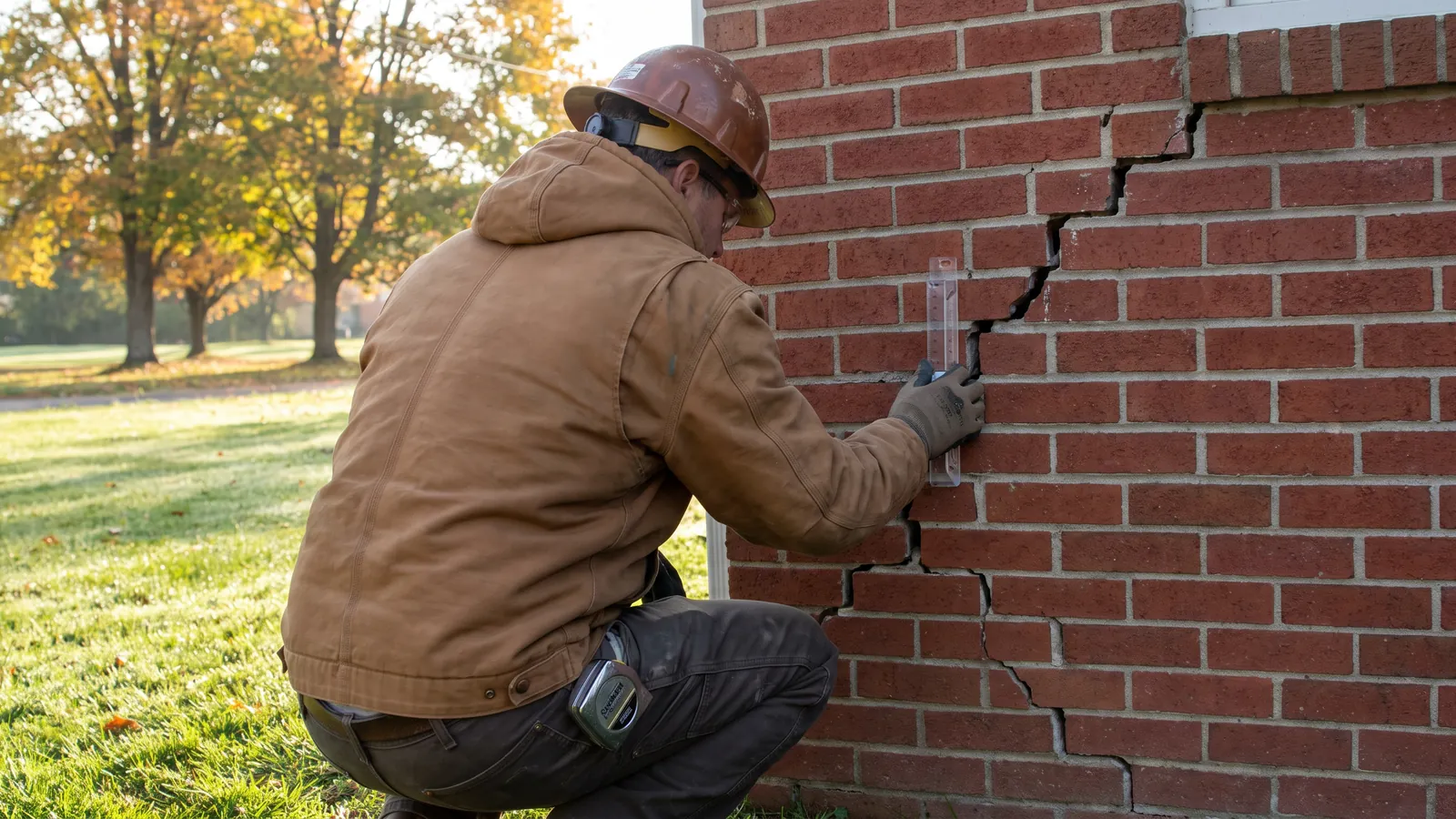
Foundation trouble rarely announces itself with one dramatic event. It shows up as a scatter of small things: a crack over a door frame, a bedroom door that will not latch, a slight roll in the hallway floor, a damp smell in the crawl space. One alone may mean little. Several together, or one that keeps getting worse, deserve a measurement.
Symptoms, causes and urgency
| Sign | What it usually means | How soon |
|---|---|---|
| Hairline vertical crack in poured concrete | Shrinkage as the concrete cured | Watch it; seal if it leaks |
| Stair-step crack in block or brick | Differential settlement, often at a corner | Get it measured this season |
| Horizontal crack in a block basement wall | Soil pressure pushing the wall in | Soon; the wall may be bowing |
| Crack wider at one end | Rotation as part of the foundation drops | Soon |
| Doors and windows sticking on one side of the house | Frames pulled out of square by settlement | Measure floors; may be seasonal |
| Floors sloping or bouncy | Settled footing, or sagging crawl space framing | Inspect; crawl space supports are often simple |
| Gap between chimney and wall | Chimney footing settling separately | Soon, before the gap lets water in |
| Gaps at baseboards or crown molding | Movement in framing or foundation | Note it and compare after a season |
| Water at the wall-floor joint | Groundwater pressure in saturated clay | Address drainage before the wall moves |
| Musty crawl space, sweating ducts | Humid air and damp ground under the house | Plan encapsulation before wood softens |
| Ground dropping beside the house | Soil washing away or into a void | Call now |
Reading cracks like a specialist
Direction tells you a lot. Vertical cracks are usually shrinkage or minor settlement. Diagonal and stair-step cracks follow a part of the house moving down relative to the rest. Horizontal cracks in a basement wall mean sideways pressure. Width tells you the rest: we use a crack gauge because "about this wide" is not a measurement anyone can compare next year.
A simple home method helps too. Draw a pencil mark at each end of a crack, write the date beside it, and take a photo with a coin or ruler for scale. If the crack runs past your marks after a season, it is moving.
Signs that mean call today
- A basement wall that has visibly pushed inward or shifted at the bottom
- A crack that opened wider than a pencil in days, not years
- Water rising in the basement or crawl space
- Soil collapsing or a hole opening near the foundation
Stay safe. Keep people away from a wall that is actively bowing, and stay out of a flooded basement while outlets or cords are near the water.
Why the local ground matters to the list
On Bowling Green's karst plain, a group of cracks clustered at one corner can point to soil being lost into a void below, not just ordinary clay movement. That is why our inspections start outside, looking for depressions, downspouts emptying into low spots and any nearby drain well, before we look at the cracks inside.
What happens at an inspection
We start in the yard, then work inside. Floor elevations get recorded across each room with a level, cracks get measured and photographed, doors and windows get checked for square, and the crawl space or basement gets a moisture reading and a look at every wall and support. You get a written summary that says what we found, what we think is causing it, what we would do and what it would cost, or that nothing needs doing yet and what to watch.
Questions readers send us
My house is new. Should I worry about cracks?
New houses often show small shrinkage cracks in the first year or two. Cracks that widen, or doors that start sticking, are worth checking even in a new home.
Are cracks in drywall a foundation sign?
Sometimes. Diagonal cracks off the corners of doors and windows can follow foundation movement; random small cracks often come from framing and humidity.
Can I tell if a crack is active?
Mark the ends with a pencil, date it and photograph it with a ruler. Check after a season. Growth past the marks means movement.
Does a bouncy floor mean foundation failure?
Not usually. In crawl space houses it is often sagging framing or failing posts, which is a smaller repair than piering.
Should I get an engineer first?
For most homes an inspection and measurements are enough to plan. For disputes, sales with large repairs or active voids, an engineer's report is worth having, and we will recommend one.
Keep reading: Free inspection · Crack repair · Clay soil guide · House leveling