Sinkhole and karst foundation repair on Bowling Green's sinkhole plain
Most of the city sits above caves. When soil drains into the rock under a house, the ground can sag slowly or drop without warning. The repair is about carrying the house down to rock that is still there.
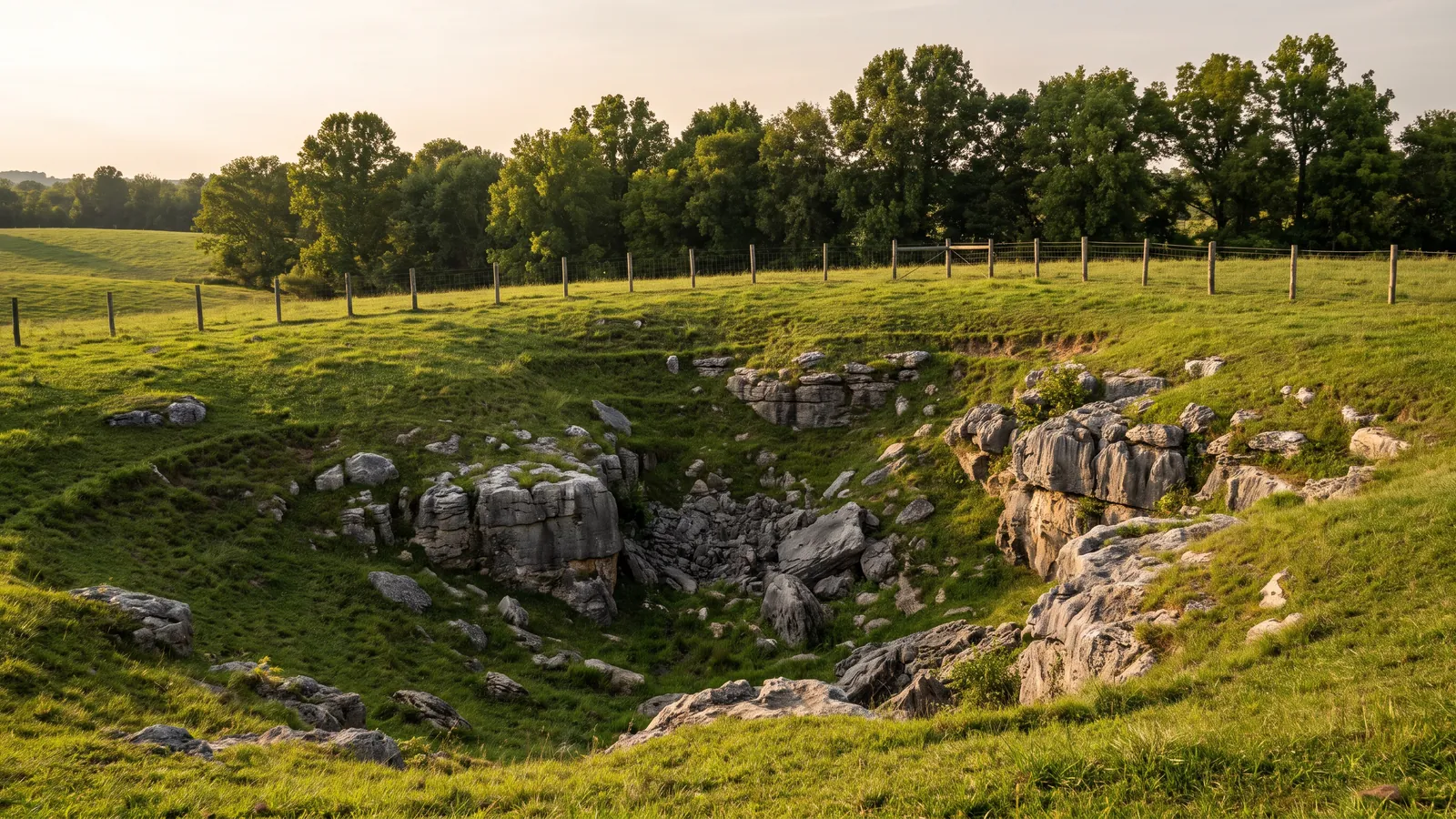
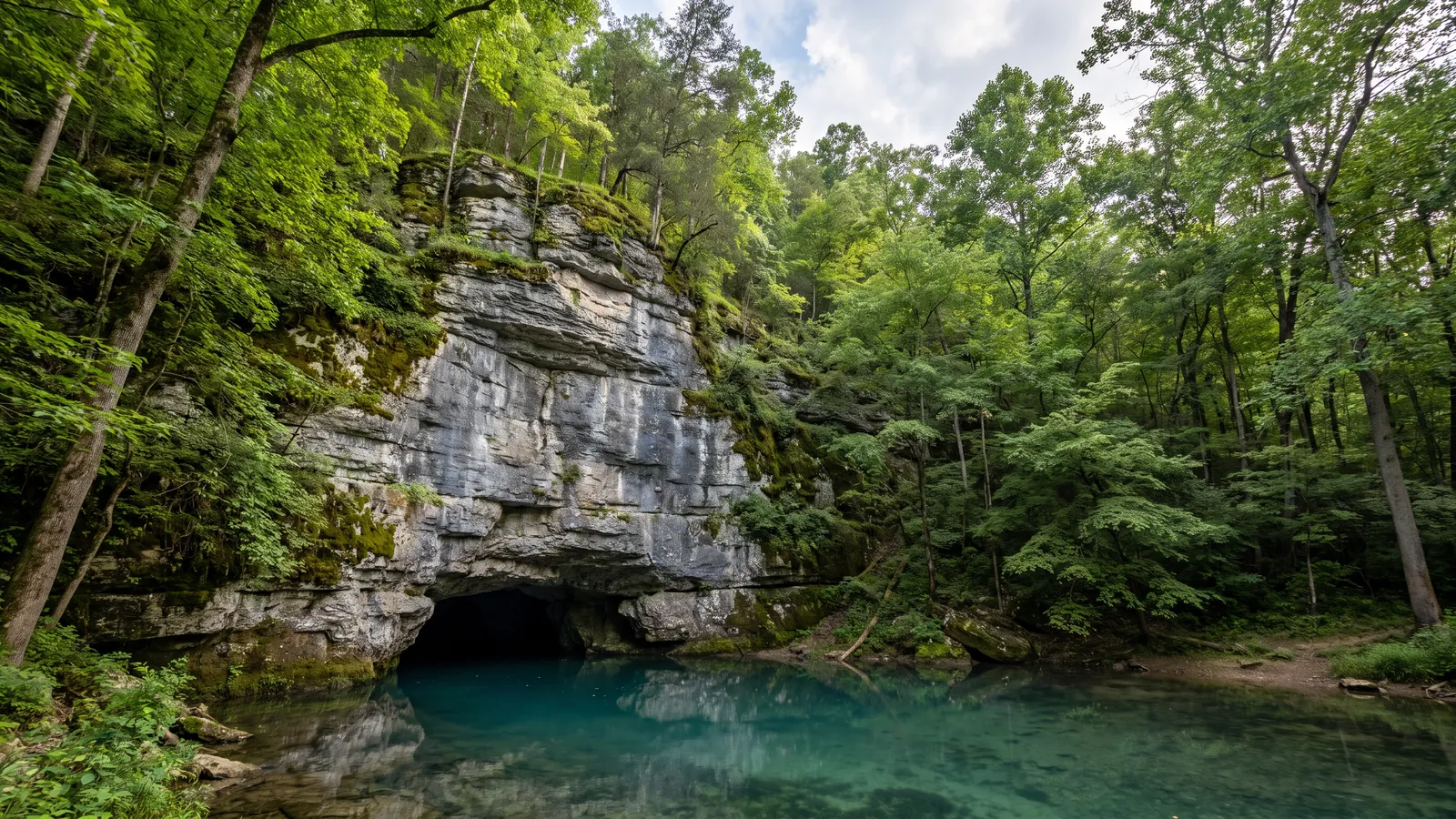
Bowling Green is built on a karst plain, a landscape of limestone that rainwater has been dissolving for a very long time. The rock is laced with cracks, shafts and caves; the Lost River system under the south side of town drains about 85 square miles. Very little water runs on the surface, because it goes down instead. The city relies on that: much of its stormwater is sent into drainage wells and improved sinkholes that feed the caves, wells the EPA classifies as Class V injection wells.
Sinkholes that matter to a house form in two ways. In slow subsidence, soil above an opening in the rock washes downward a little at a time and a shallow bowl develops at the surface, sometimes over years. In a cover collapse, the soil bridges a growing cavity until it cannot, then drops all at once. That is what happened under the National Corvette Museum on February 12, 2014. Heavy rain speeds both along. After more than ten inches fell in about four days in April 2025, the city responded to at least 18 new sinkholes, and its geologist pointed out that wet clay becomes heavier and weaker at the same time.
Depth to the caves is not the same everywhere. According to the city geologist, much of the ground north of the river sits 90 to 200 feet above it, with caves around 150 feet down, while along the Russellville Road and Nashville Road corridors on the northwest side groundwater is shallow and cave passages are often 15 to 20 feet or less beneath the surface. Two houses a mile apart can face very different odds.
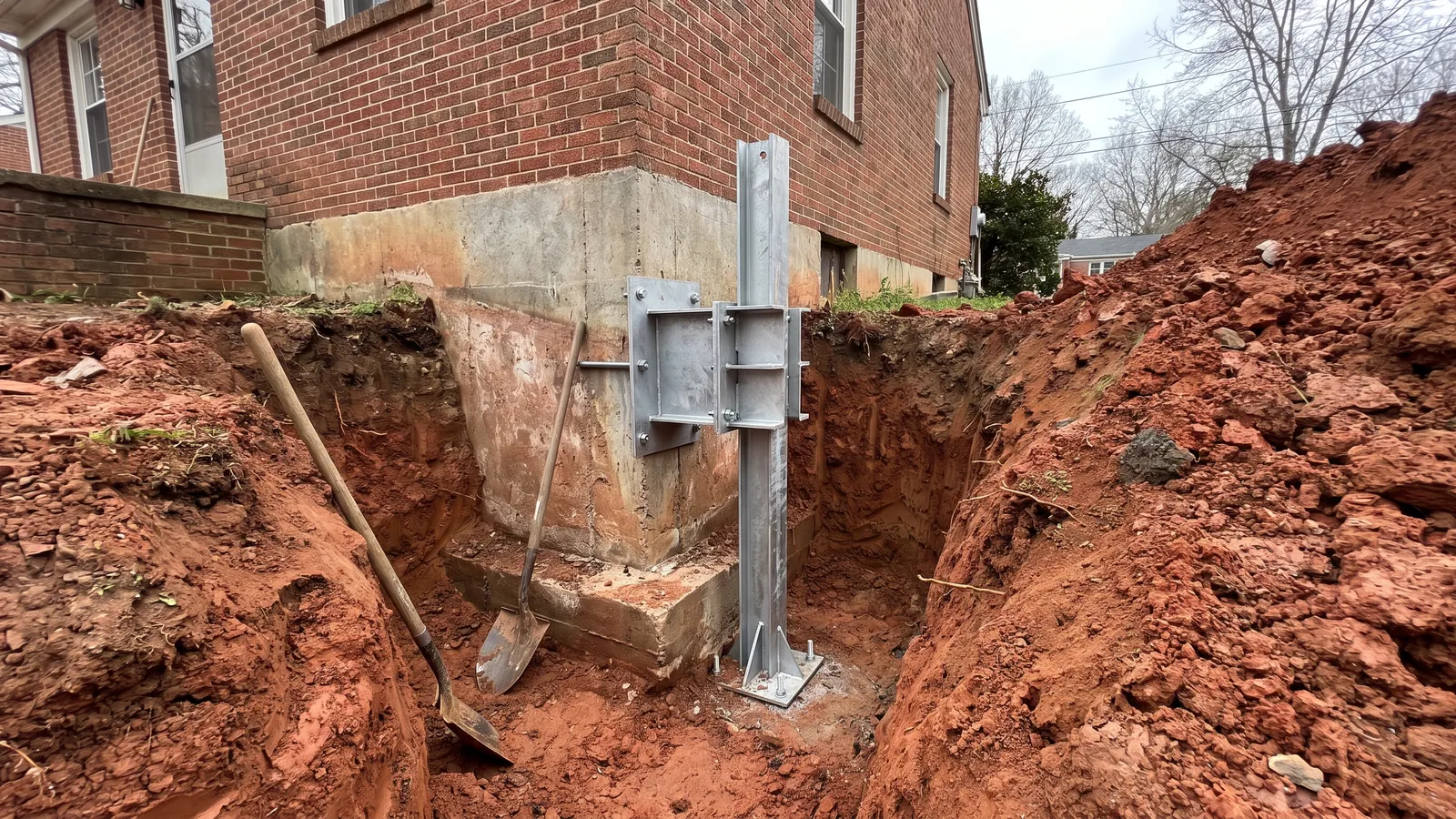
What a foundation company can do is support the house. Where a footing or slab has lost soil to the rock below, we drive steel push piers down past the disturbed ground to sound limestone, log the depth of each one, then lift and lock the structure. We also deal with the water: downspouts, grading and drains that pile runoff up next to the house are often what set the soil moving. What we will not do alone is fill a large or active void. The Kentucky Geological Survey recommends geophysical study and core sampling when evaluating karst sites, and filling or grouting a true cavity under a house is engineered work. When the inspection points there, you will hear it, and the engineering comes before the piers.
What the job covers
House carried to rock
Push piers driven through washed-out or soft soil to sound limestone, with the depth of each one logged.
Water moved away
Downspouts, grading and drains changed so runoff stops collecting beside the foundation.
Signs read on site
Depressions, cracks that widen quickly, doors that suddenly bind and soil dropping along the footing, all measured.
Engineering for real cavities
Large or active voids flagged for a geotechnical engineer before any repair is designed.
Public land sorted out
Holes in streets or on city property go to Public Works, and you will know who to call.
Insurance facts up front
Standard homeowners policies usually exclude sinkholes and earth movement, so the job is priced as if you are paying.
What sinkhole and karst repair costs around Bowling Green
| Item | Budget range | What moves it |
|---|---|---|
| Push pier to rock, each | about $1,500 | Depth on karst varies pier to pier |
| Push pier project | $9,000 – $15,000 | Today's Homeowner national range |
| Downspout and grading corrections | Quoted per house | Often the first step |
| Exterior French drain | $10 – $100 per ft | Fixr national range |
| Geotechnical study and grouting | Priced by the engineer | Only when a cavity needs filling |
These are national cost-guide figures, offered so you can plan. On karst the depth to rock at each pier moves the total more than anything else, so the written number after your inspection is the one that counts. Engineering and grouting, when needed, are priced by the engineer.
What this work looks like
Sinkhole and karst repair: what homeowners ask
There is a new hole in my yard. What should I do?
Keep people, pets and vehicles away from it, and don't try to fill it with loose dirt or debris. If it is in a street or on city property, report it to Bowling Green Public Works at 270-393-3628. If it is near your house, call us and we will check whether the foundation is losing support.
Can a sinkhole be fixed for good?
The house can be supported on rock so that more soil loss beneath it no longer moves it. The ground is still karst, though, and controlling the water that feeds the hole is what keeps the yard from reopening.
Does insurance cover sinkhole damage in Kentucky?
Usually not under a standard homeowners policy, which typically excludes earth movement, sinkholes included. Some insurers sell an endorsement. Check your policy and talk with your agent. See our insurance guide.
Is my neighborhood at risk?
The whole Bowling Green area is karst, but depth to the caves varies. The northwest side along Russellville Road and Nashville Road has caves much closer to the surface than the higher ground north of the river. A history of depressions on nearby lots is worth noting.
Why did the Corvette Museum floor collapse?
Karst. A cave roughly 30 feet below the floor lost its roof, and a Western Kentucky University geologist tied it to the same geology that runs under most of the city.
Do you fill sinkholes?
Small surface depressions well away from the house can be regraded with the drainage corrected. A real cavity under or beside a foundation needs an engineer's plan, and we will not pour fill into one blind.