Concrete leveling for the walk, the porch steps and the slab that sank
A slab that has dropped an inch or two is usually still a good slab. The soil underneath gave way, not the concrete. Lifting it back into place with grout or foam costs a fraction of tearing it out, as long as the ground below has stopped moving.
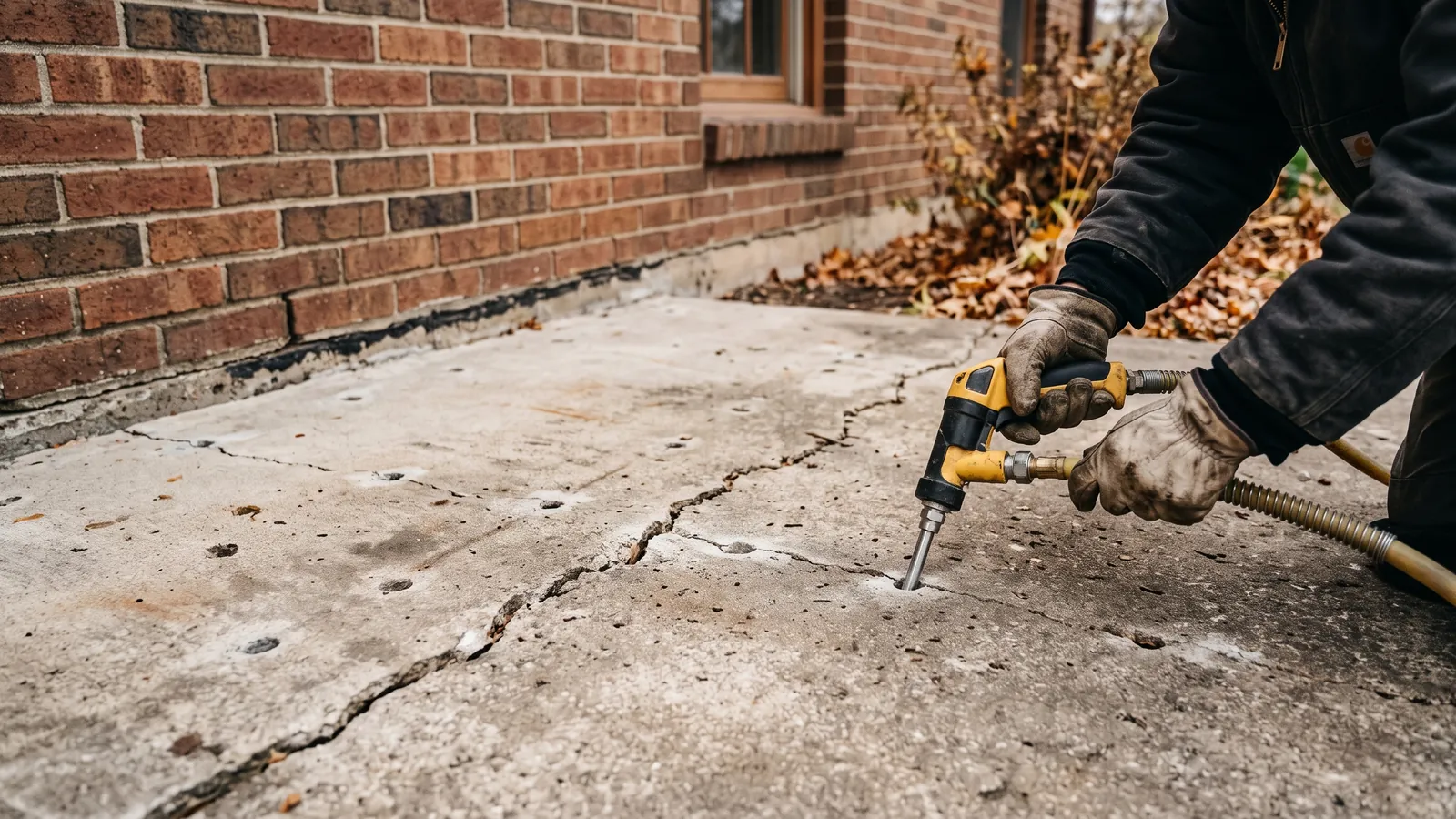
Sidewalks, porch steps, patios, driveway sections and garage floors settle for plain reasons. Fill soil around a house was never compacted as well as the native ground. Downspouts empty beside a walk for years and wash fines out from under it. Clay dries and shrinks through a hot, dry August and leaves a gap the slab sags into. On the sinkhole plain there is an extra one: the Kentucky Geological Survey notes that soft residual clays can settle gradually under load, and that water seeping downward can carry the supporting soil into voids in the limestone below. The result is a trip edge at the front walk, a patio tilting toward the house, or porch steps pulling away from the porch.
There are two ways to lift a slab. Mudjacking pumps a cement-based slurry through holes drilled in the concrete, filling the void and floating the slab back up. It is the older method and usually the cheaper one. Polyurethane foam leveling injects an expanding foam through much smaller holes; the foam is light, so it adds little weight to soft soil, and it cures quickly, so a walk or driveway is usable soon after. Fixr puts mudjacking at roughly $3 to $25 a square foot, with a 100-square-foot section commonly $500 to $1,700, and polyurethane at about $20 to $25 a square foot, up to around $2,500 for the same section.
Leveling is the wrong tool in a few situations, and we will say so. A slab broken into many loose pieces will not lift as a unit. A slab still dropping because something below is actively giving way, such as a new depression or hole opening up nearby, needs the cause found first; see sinkhole and karst repair. And a slab that carries part of the house, as in a slab-on-grade home or an addition, is foundation work, covered on the slab foundation repair page.
After the lift, the holes are patched, the joints and cracks are sealed so water stops getting under the slab, and the downspout or grading that started the problem gets fixed. Skip that last part and the same slab is back on the list in a few years.
What the job covers
Cause found before lifting
Fill settlement, washout from a downspout, shrinking clay or a void below identified, so the lift is not just temporary.
Mudjacking or foam
Cement slurry where weight is no concern and budget matters; polyurethane where the soil is soft, the holes need to be small or the slab must be used quickly.
Lifted under watch
Slabs raised slowly with levels and string lines on them, so walks meet steps and patios drain away from the house.
Holes and joints sealed
Injection holes patched and joints and cracks sealed to keep water from washing out the new support.
Water problem fixed
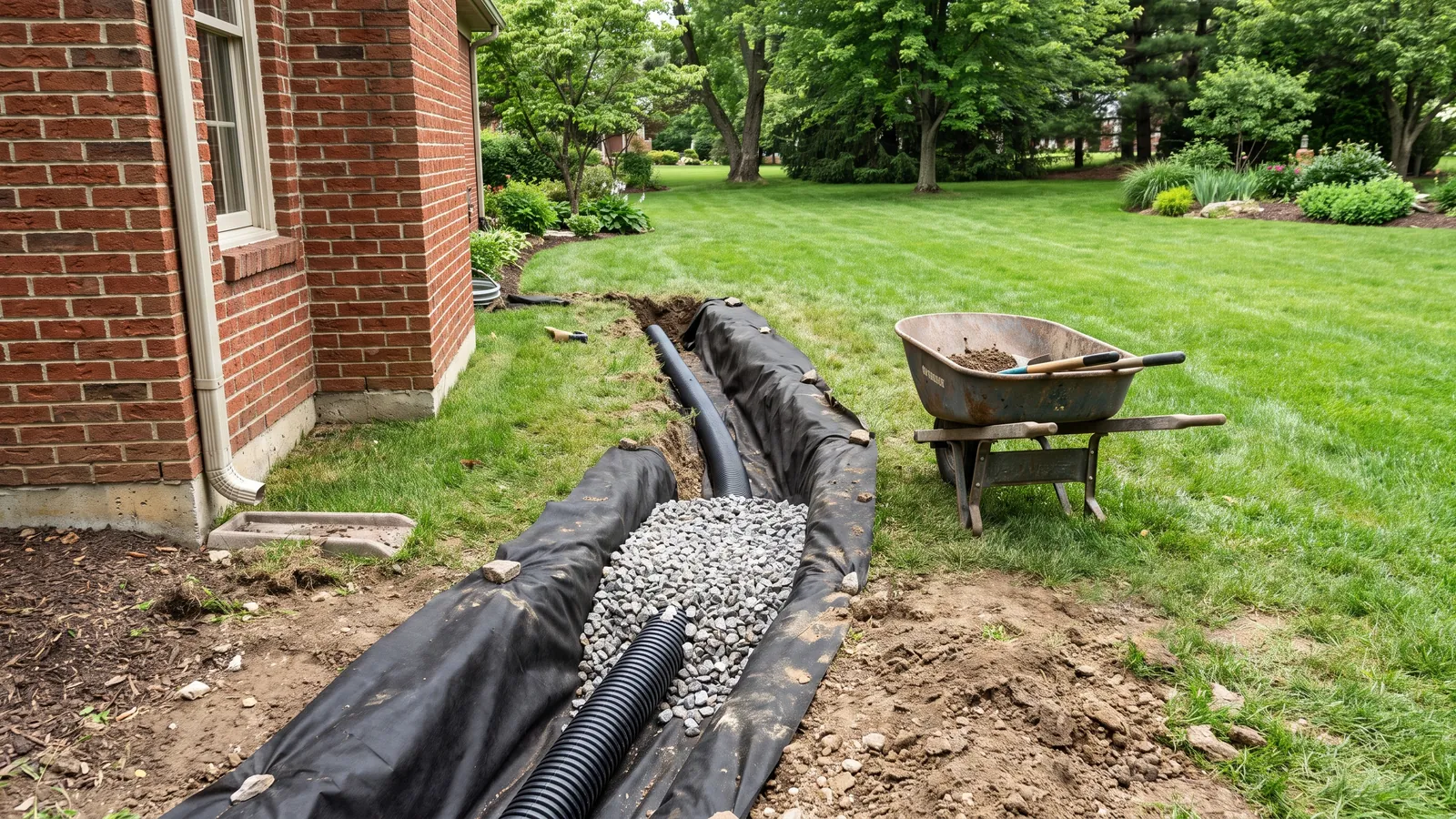
Downspouts extended and soil regraded where they caused the washout in the first place.
Honest when it will not work
Broken-up slabs and anything over an active void are flagged before you spend money lifting them.
What concrete leveling costs in Bowling Green
| Item | Budget range | What moves it |
|---|---|---|
| Mudjacking | $3 – $25 / sq ft | Fixr national range |
| Mudjacking, 100 sq ft section | $500 – $1,700 | Fixr; about $1,500 average |
| Polyurethane foam leveling | $20 – $25 / sq ft | Fixr national range |
| Polyurethane, 100 sq ft section | Up to about $2,500 | Fixr figure |
| Mudjacking or polyjacking, typical project | $500 – $1,900 | Fixr foundation-repair range |
| Joint and crack sealing after the lift | Quoted on site | Recommended on every job |
All figures are national ranges published by Fixr. The size of the slab, how far it dropped and what the ground below is doing decide the real price, which you get in writing before any holes are drilled.
What this work looks like
Concrete leveling: what homeowners ask
Mudjacking or foam: which should I pick?
Mudjacking costs less and works well for walks, steps and patios on reasonably firm ground. Foam weighs much less, so it suits soft soil and slabs over clay that is already struggling, uses smaller holes, and cures fast. We recommend one after seeing what is under the slab.
How long until I can walk or drive on it?
Foam-lifted slabs are usually ready to walk on very soon after the work, and to drive on not long after. Mudjacked slabs take longer for the grout to set. We give you the specific wait for your job.
Will the slab sink again?
Not if the reason it sank is dealt with. Lifting a walk while the downspout keeps flooding the same spot only buys time. Sealing joints and moving the water away is part of every job.
Can you level a garage floor?
Often, if it settled as a unit and is not badly broken. A garage slab that is cracked into many pieces, or one sitting over continuing settlement, is usually better replaced or piered.
Will the drill holes show?
They are patched with a matching mix, but you will be able to find them if you look. Foam holes are smaller and less noticeable than mudjacking holes.
My patio dropped suddenly after heavy rain. Is that normal settlement?
A sudden drop, a new hole or a depression opening beside a slab is not ordinary settlement in a karst area. Stay off it and have it looked at before anyone lifts anything; it may be a void that needs attention first.