Sump pump installation with a backup for the night the power drops
A sump pump is the one part of a waterproofing system with moving parts, and it tends to be needed most during the same storms that knock the power out. We install it as a system: basin, pump, check valve, discharge line and a backup that does not depend on the grid.
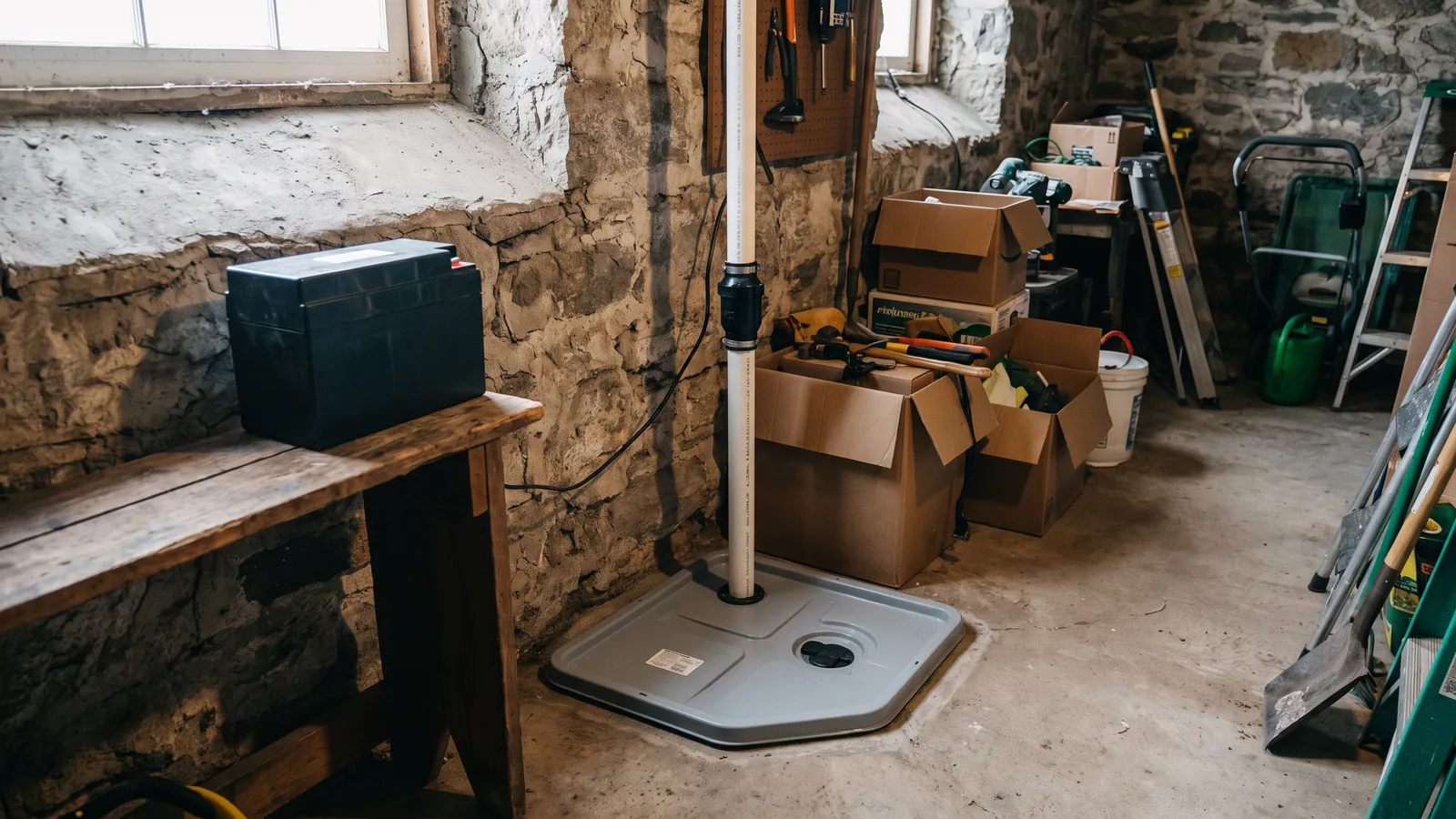
Most of the pumps we see in Bowling Green basements and crawl spaces were installed as an afterthought: an open hole in the floor, a pedestal pump of unknown age, a garden hose or flexible tube for a discharge, and nothing to take over if the motor seizes or the electricity goes. That is fine until the one storm when it is not. A properly built sump starts with a lidded basin set into the drain system it serves, so it collects water from the perimeter drain rather than just the floor. The pump inside is a submersible unit matched to the inflow, with a float that cannot hang up on the basin wall. A check valve keeps the water in the discharge line from falling back and re-cycling the pump. The lid keeps debris, children and pets out and cuts down on humidity.
The backup is where most installations fall short. A battery backup pump sits beside the main pump in the same basin and starts on its own float if the water keeps rising, whether the main pump has failed or the house has lost power. An alarm tells you it ran. Spring storms here can stall over the region for days, as they did in April 2025 when more than ten inches fell in about four days, and a basement full of water is an expensive way to learn the primary pump quit on day two.
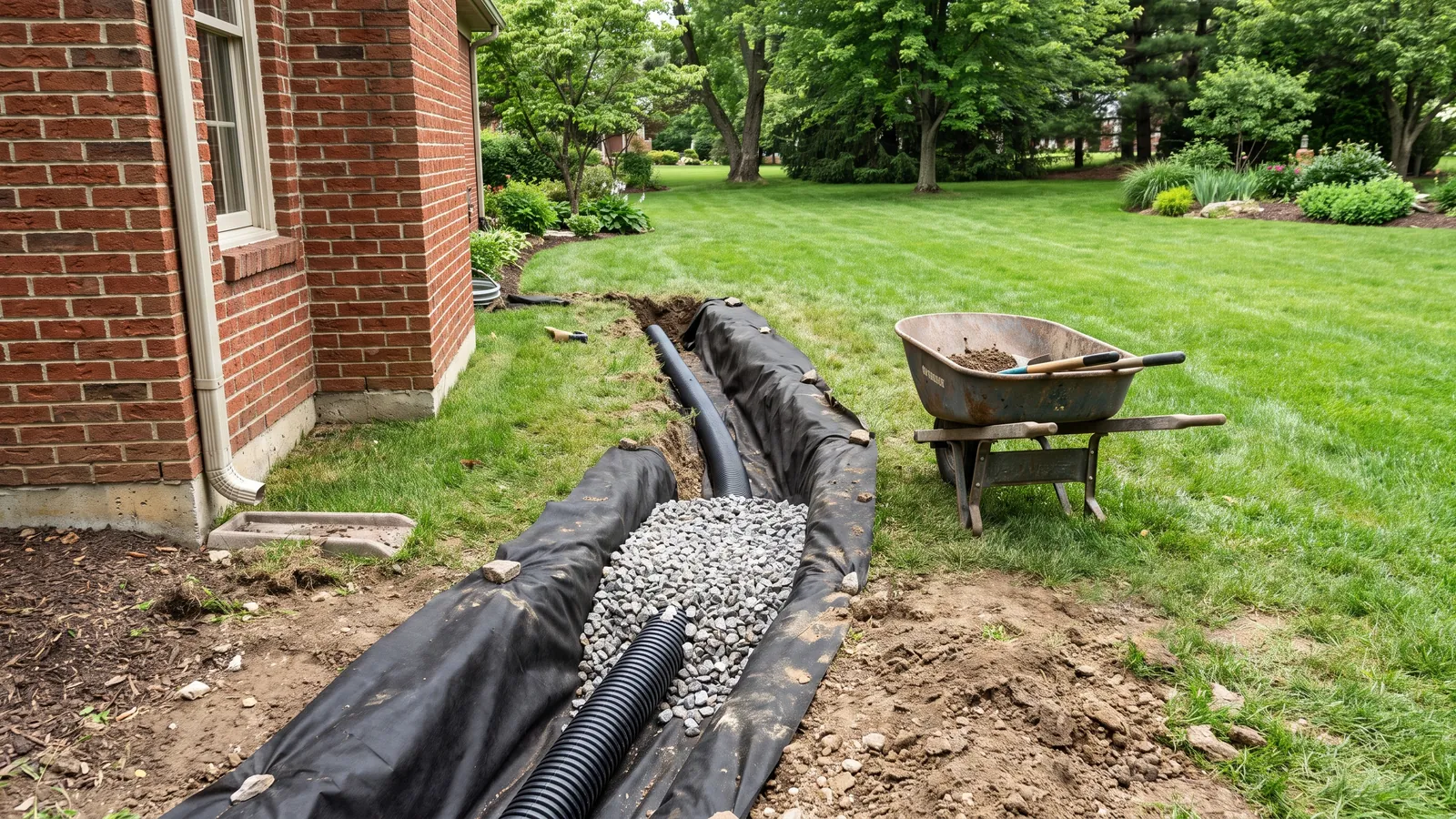
The discharge deserves as much thought as the pump. The line should leave the house in rigid pipe, slope so it drains between cycles, and end at daylight well away from the foundation and downhill from it. Bowling Green winters bring roughly eight inches of snow a year and plenty of freezing nights, and a discharge line that holds water can freeze solid at the outlet. Pointing the outlet at a sinkhole or one of the city's drainage wells is not your call to make alone: those are part of the stormwater system the City runs under EPA rules, and Public Works (270-393-3628) wants to hear about it first.
A sump pump is usually the end of a basement waterproofing or crawl space encapsulation job, but we also replace and upgrade existing pumps on their own. If yours runs constantly in dry weather, short-cycles every few seconds or has never been tested, it is worth a look.
What the job covers
Sealed basin in the drain line
A lidded basin connected to the perimeter drain, so it collects water where it actually arrives instead of only from a hole in the floor.
Pump sized to the inflow
A submersible pump chosen for how much water the system sees in a real storm, with a float that cannot snag on the basin wall.
Check valve and rigid line
A check valve to stop backflow and rigid discharge pipe that drains between cycles instead of holding water to freeze.
Battery backup and alarm
A second pump on its own float and battery, with an alarm so you know when the primary pump failed or the power went out.
Discharge to daylight
Outlet downhill and well away from the foundation, never into a sinkhole or drainage well without the City's say.
Tested before we leave
The basin filled with water and every float, valve and alarm run through a full cycle while you watch.
Sump pump installation cost in Bowling Green
| Item | Budget range | What moves it |
|---|---|---|
| Sump pump installation, complete | $600 – $2,500 | Fixr range: basin, pump, check valve, discharge |
| Battery backup pump and alarm | Quoted with the pump | Added in the same basin |
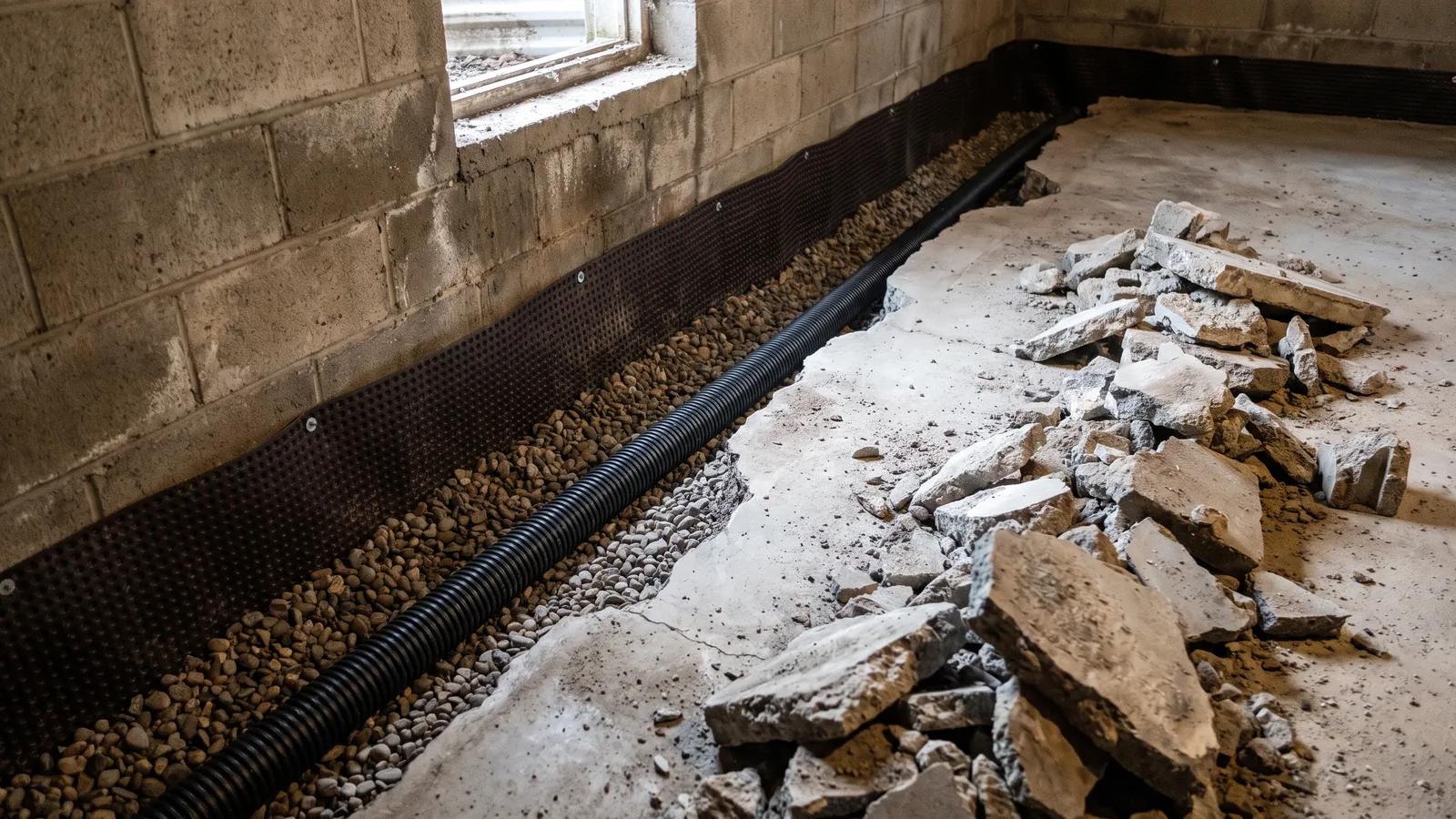
| Interior perimeter drain feeding the sump | $40 – $120 / linear ft | When water enters along the walls |
| Exterior discharge line to daylight | Quoted per run | Length, depth and landscaping set it |
| Crawl space dehumidifier, installed | $800 – $2,000 | Often paired in encapsulation jobs |
The installation range is Fixr's national figure. Battery backup units, discharge runs and drain work vary with the house, so they are priced on site and itemized before anything is installed.
Keep a record by the basin
We leave a card like this taped to the basin lid, filled in, so whoever checks the pump next knows what is down there.
What this work looks like
Sump pump installation: what homeowners ask
How long does a sump pump last?
It depends on how often it runs. A pump that cycles every spring storm wears faster than one that kicks on twice a year. Rather than wait for it to quit, test it each spring by pouring water into the basin until it starts, and watch it shut off cleanly.
Is a battery backup worth the cost?
If the basement is finished, holds anything you care about, or the house sits low on its lot, yes. The storms that fill sump basins are the same ones that knock out power, and a backup is far cheaper than drying out a basement.
My pump runs every few minutes in dry weather. Is that normal?
No. A pump that keeps cycling without rain can mean a stuck check valve sending water back down, groundwater sitting high under the house, or a plumbing leak feeding the basin. Each has a different fix, and we will find which it is.
Can the discharge go into the storm drain or a sinkhole?
Not on your own say-so in Bowling Green. Drainage wells and improved sinkholes are part of the city's stormwater system, and Public Works wants to know before anything is tied into one. Discharging to the yard, downhill and well away from the house, is the usual answer.
Does a crawl space need a sump pump?
Only if water actually collects there. Many crawl spaces need better gutters and grading and a liner, not a pump. One that holds standing water after storms usually does need a drain line and a pump before it is encapsulated.
Can you replace just the pump?
Yes. If the basin and lines are sound, swapping a failed pump and adding a check valve and backup is a straightforward visit.