Crawl space repair for floors that have started to dip, bounce and creak
Under a good share of Bowling Green houses there is a two- or three-foot gap of damp red clay, a row of block piers and a wood girder that has carried the floor for decades. When the floor overhead goes soft, the cause is almost always down there, and so is the fix.
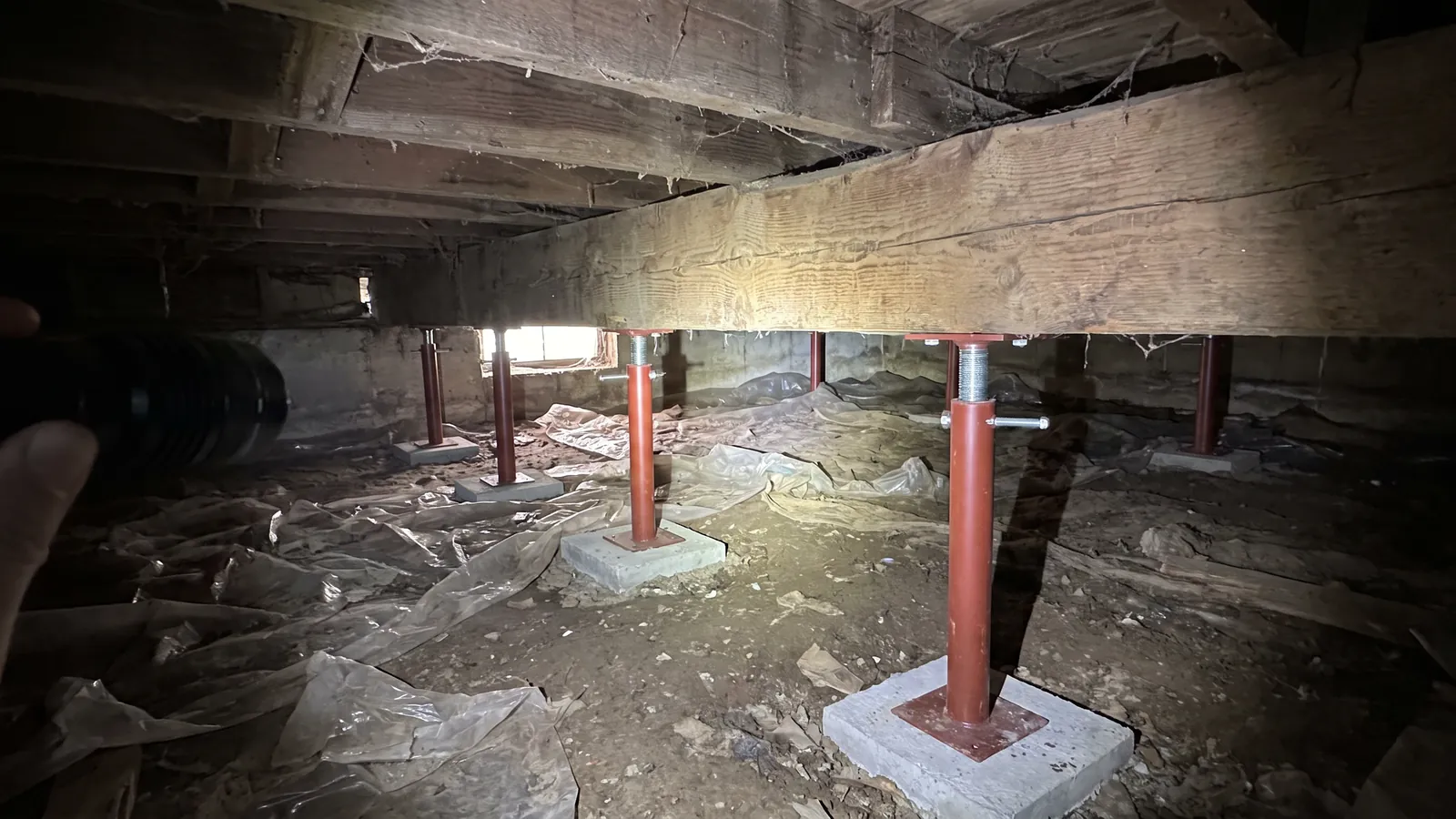
More than a third of the homes in Bowling Green were built before 1980, and many of them sit over a vented crawl space rather than a basement or a slab. The parts that wear out are predictable. Dry-stacked block piers sink into wet clay at uneven rates. Wood shims that once took up the gap between pier and girder rot or crush. Girders sag between supports that were spaced too far apart to begin with. Sill plates and rim joists soften wherever a gutter has been overflowing onto the wall for years, and joists end up notched or cut by a plumber or a furnace installer who needed the room. Upstairs, that reads as a dip in the hallway, a kitchen floor with some spring in it, a diagonal crack over an interior door, or a door that swings shut by itself.
The ground makes it worse. Warren County clay soaks up water in a wet spring, and May is the wettest month here at about five and a half inches on average, then shrinks back through a dry late summer. A pier that is nothing more than block resting on topsoil rides that cycle up and down. Add the humidity a vented crawl space pulls in every July, and the framing stays damp long enough for decay to set in. Repairing the wood without dealing with the water only resets the clock.
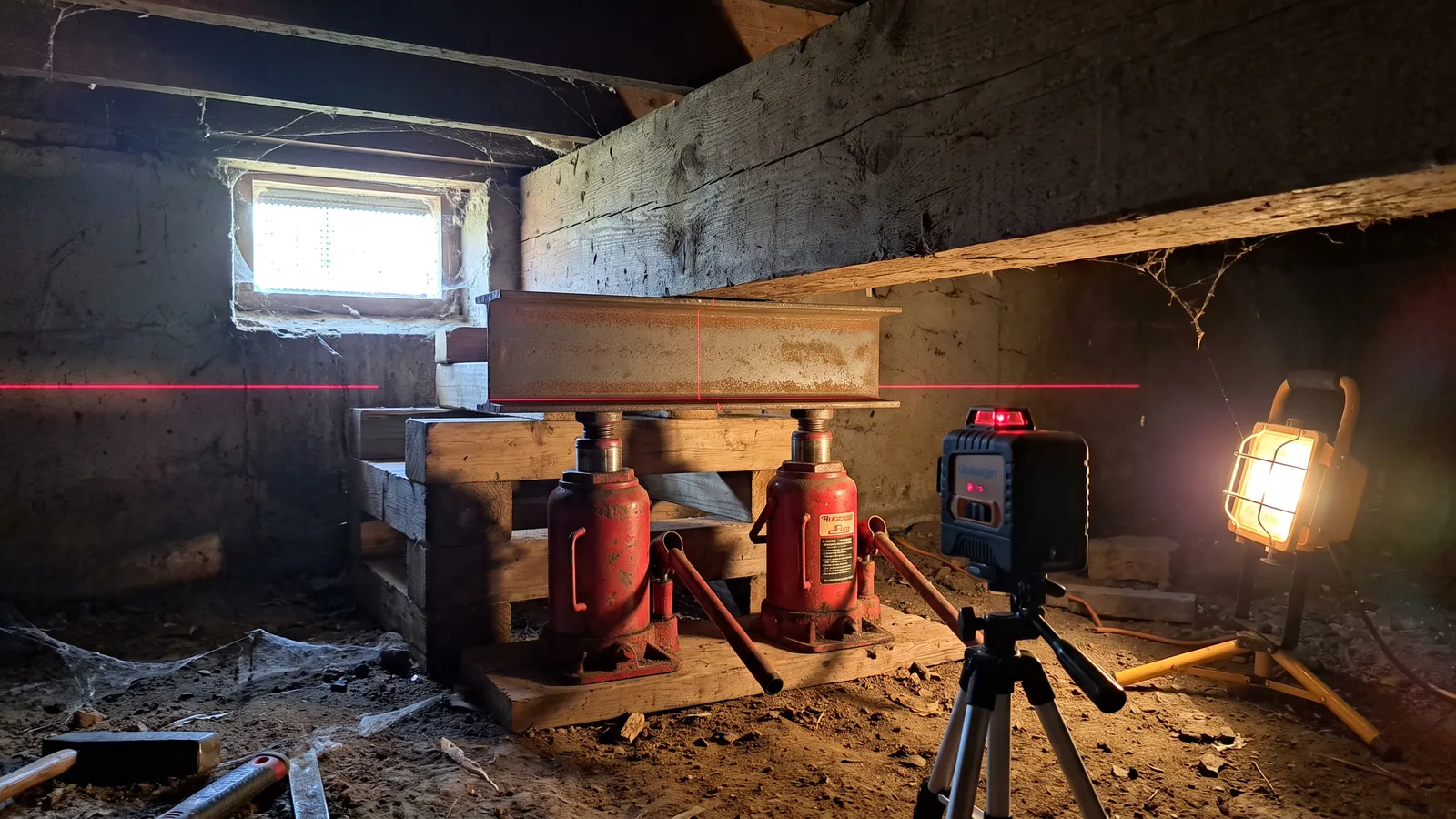
We start with numbers. A laser level gives us floor elevations across the house, so we know where the low spots are and how far they have dropped. We trace the girder line, probe the sill and rim with an awl, check moisture content in the framing and look at what each pier is actually standing on. The repair usually combines adjustable galvanized steel posts set on new footings dug through the soft topsoil, sistered or replaced joists, new sections of sill and girder in treated lumber, and a staged lift that brings the floor up a little at a time, sometimes over two visits, so plaster and tile can follow. Where the floor needs more than posts can give, the house leveling page explains the next step, and where the outside walls themselves are settling, piers under the footing come into it.
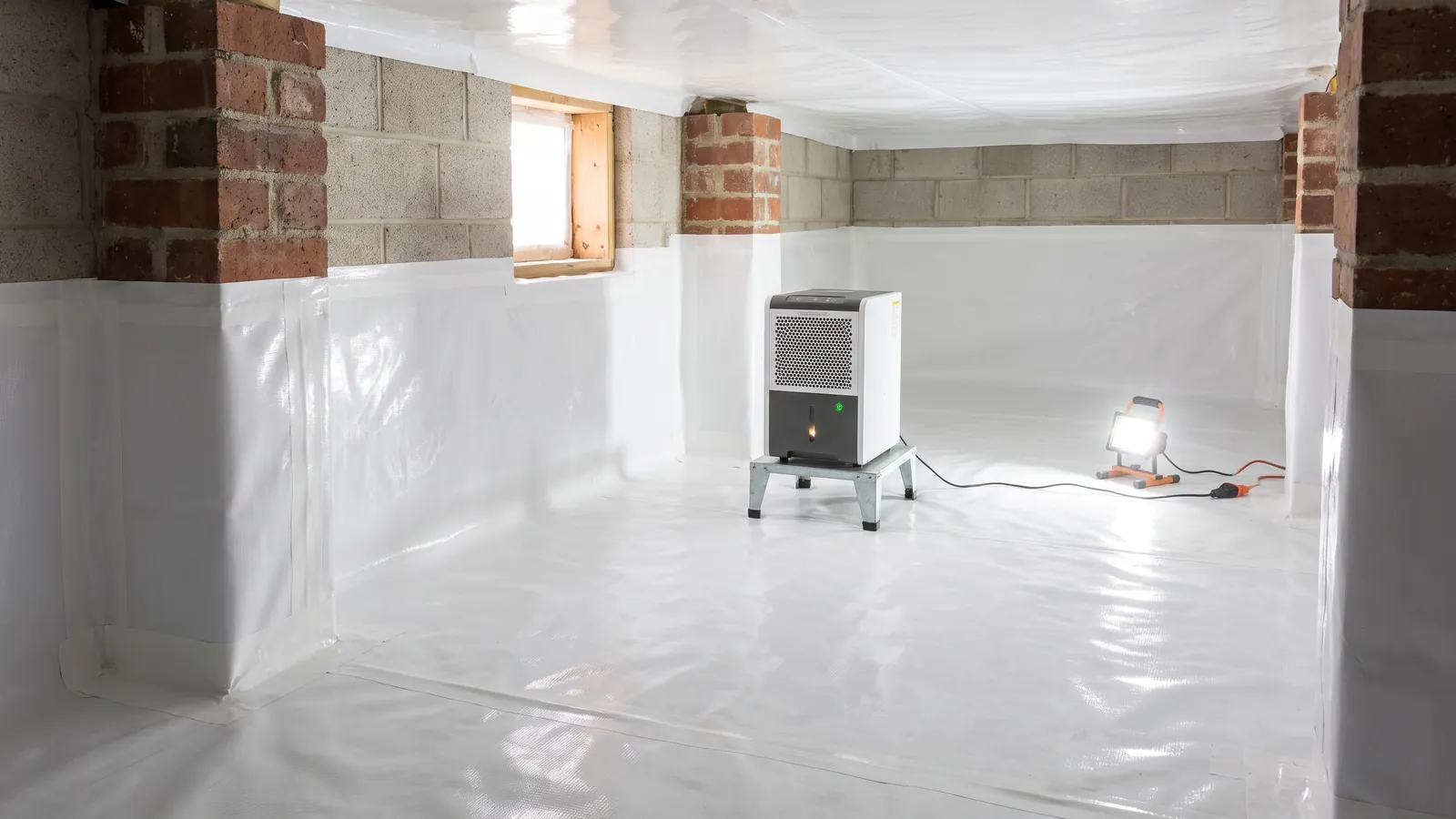
Replacing structural members changes the structure, and inside Bowling Green city limits the Building Division requires a permit for work that alters or repairs one. We file it and keep it posted on site. Once the framing is sound, the moisture side gets its turn: gutters and grading first, then a liner, and for many houses full encapsulation.
What the job covers
Elevations before anything moves
A whole-floor survey with a laser level, so each lift is measured against numbers you can see rather than a guess made from the hallway.
Posts on real footings
Adjustable galvanized steel posts on footings dug past the soft topsoil, spaced to what the girder can span instead of wherever an old block stack happened to land.
Rot cut out, not covered
Soft sill plate, rim joist and girder sections removed and replaced or sistered with treated lumber, bolted where bolts belong.
A lift in stages
Floors raised in small increments, sometimes across two visits weeks apart, so drywall, plaster, tile and door frames have time to settle into the new position.
The water source found
Downspouts, yard slope, plumbing drips and open vents checked, since repaired framing in a wet crawl space goes soft again within a few years.
Permit on the job
Structural work inside city limits is permitted through the Building Division; outside them, through whichever office covers the address.
Budgeting for crawl space repair in Bowling Green
| Item | Budget range | What moves it |
|---|---|---|
| Inspection, floor survey and written plan | $0 | No charge, no obligation |
| Additional foundation piers where footings must go deeper | $1,000 – $3,000 each | All pier types, Fixr national range |
| Steel posts, new footings, sill and joist repair | Quoted per house | Depends on span, access and how much wood is soft |
| Crawl space dehumidifier, installed with wiring | $800 – $2,000 | This Old House range |
| 20-mil vapor barrier, material only | $0.50 – $0.70 / sq ft | HomeAdvisor figure |
| Full encapsulation after the structural repair | $5,000 – $15,000 | HomeAdvisor typical range |
These are national cost-guide figures (Fixr, HomeAdvisor, This Old House) to help you plan. Crawl space framing repairs vary too much to price from a web page; your number comes in writing after the inspection, before any work is scheduled.
What this work looks like
Crawl space repair: what homeowners ask
How do I tell a crawl space problem from a foundation wall problem?
Look at where the damage sits. A dip in the middle of the house, a soft spot near a bathroom or a crack over an interior doorway points under the floor, at the girder and its piers. Stair-step cracks in the outside brick, a gap at a window frame or a corner that has dropped points at the perimeter footing. Plenty of houses have a bit of both, which is why we measure the whole floor.
Can a sagging floor be fixed without tearing it up?
Almost always. The work happens from underneath: new footings, steel posts, sistered joists and a slow lift. The floor surface stays put, though finishes that cracked while the floor sagged may need patching once it is level.
Do I need a permit for crawl space repair in Bowling Green?
Inside city limits, the City's rule covers work that alters or repairs a structure, and replacing girders or posts does both. We confirm with the Building Division and pull the permit. Outside the city, the county or city building office where the house sits decides, and we check before starting.
Will the drywall cracks close when the floor comes up?
Some narrow and some close nearly all the way; others were patched or painted over and simply stay visible. Plan on touch-up work afterward, and let a staged lift run its course before repainting.
How long does the work take?
A post-and-girder repair under a typical house is usually a day or two of crew time once the materials are on site. A floor that has dropped a lot may need a second, smaller lift a few weeks later.
Do you handle mold in the crawl space?
We deal with what makes a crawl space wet: drainage, open vents, liners and dehumidifiers. Heavy growth on the framing can call for a remediation specialist first, and if we see that, we tell you before quoting anything else.