Foundation repair in Bowling Green that starts by asking why the house moved
Piers, anchors, posts and drains each fix something different. Choose the wrong one and the house keeps moving. So the first visit is about the cause: wet clay, soil washed into the limestone, a wall under pressure, or a crawl space giving way.
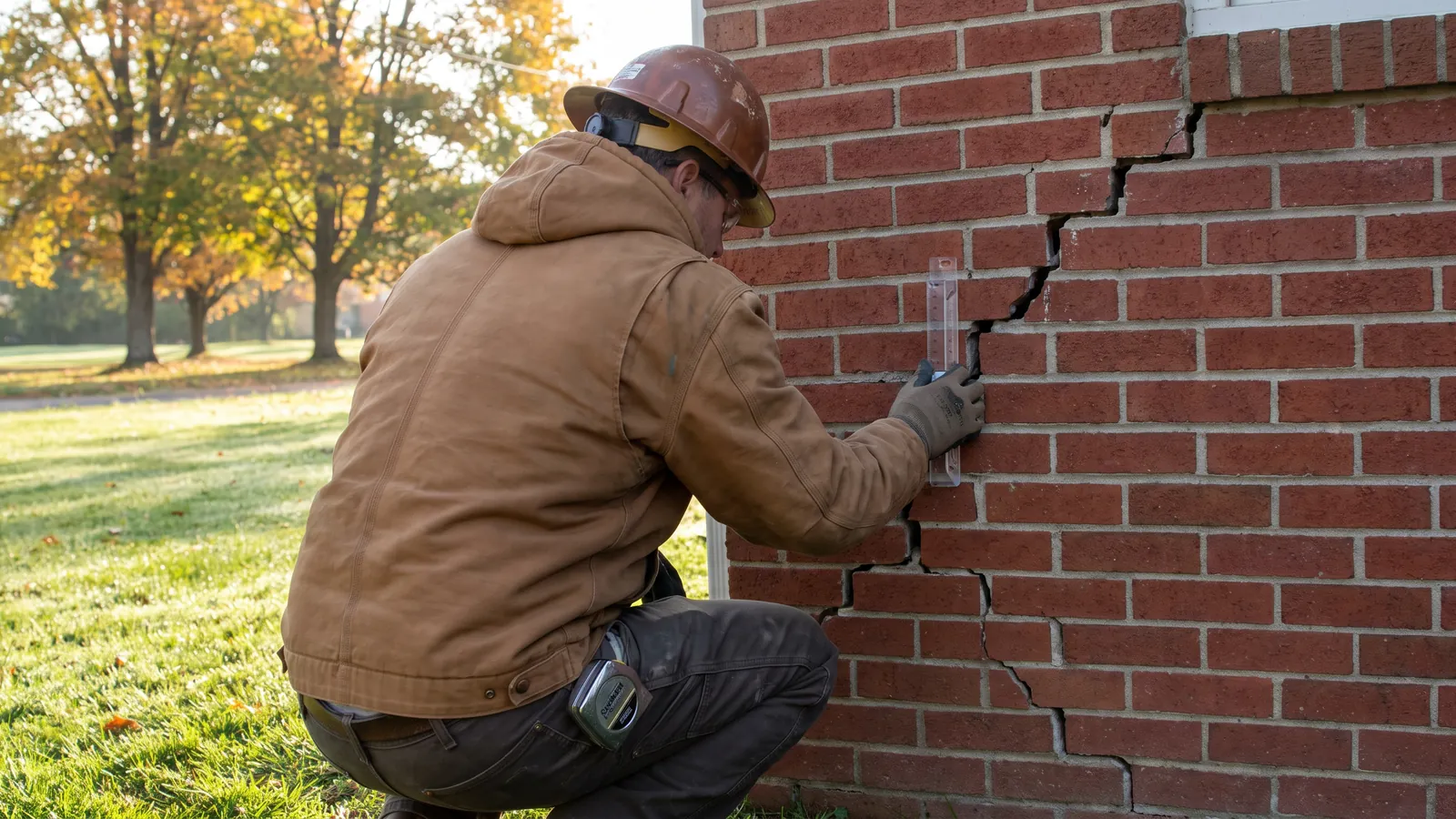
Ask several companies about a cracked corner and some will quote piers before they have walked around the house. On the ground around Bowling Green that is a gamble, because the same crack can come from three different places. Red clay subsoil swells in a wet spring and shrinks in a dry late summer, and a footing sitting in it rides up and down with the seasons. Water running down cracks in the limestone carries soil with it, so a corner can lose support from below with no sign at the surface. And a block basement wall can be pushed inward by saturated clay while the footing under it never moves at all.
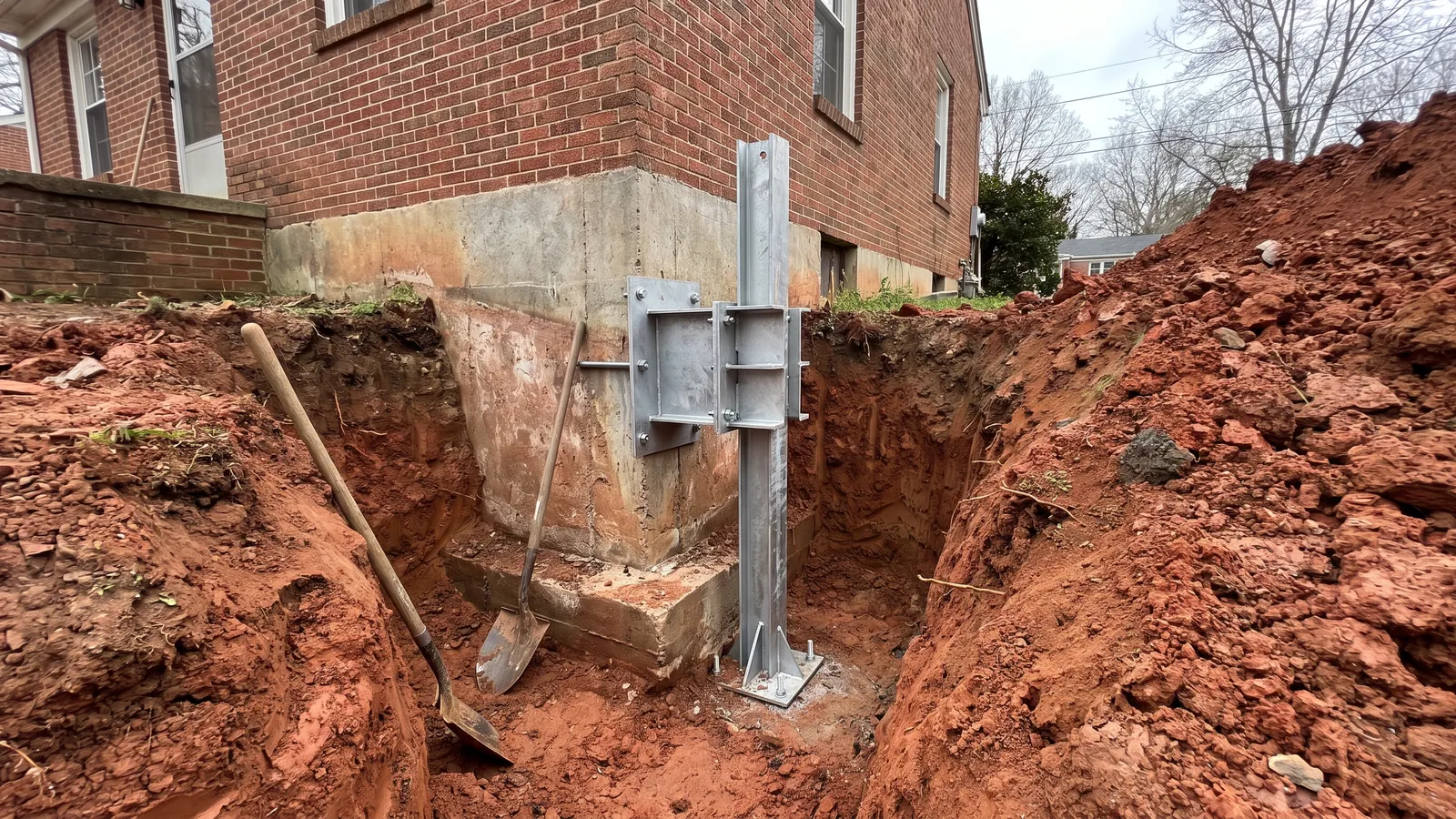
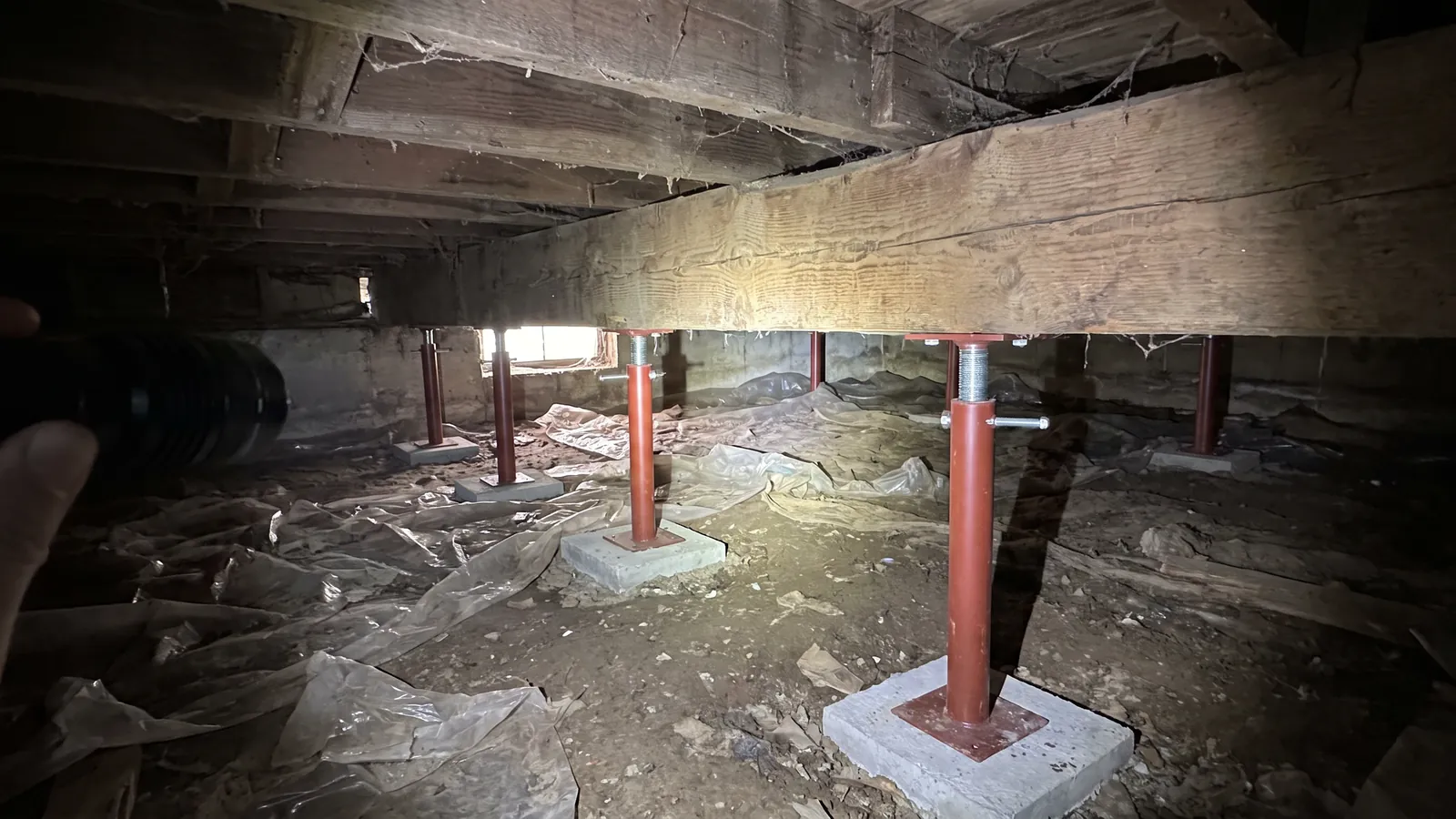
Each of those calls for a different repair. Seasonal clay movement is often solved with gutters, downspouts and grading, sometimes with piers under the worst corner. Soil lost into the rock calls for steel push piers or helical piers taken down to firm bearing. A wall under pressure needs anchors or bracing, not piers. Floors sagging over a crawl space usually need new posts and girders. The inspection is built to tell these apart: floor elevations taken across every room with a laser level, crack widths read with a gauge, walls checked for plumb, the crawl space or basement checked for moisture and rot, and the gutters, downspouts and slope of the yard walked outside.
The house itself narrows things down. Bowling Green's median home was built in 1991. More than a third of the city's houses predate 1980, many on block walls and crawl spaces that have had half a century to shift, while the slabs and additions of the 1990s and 2000s are now old enough for settling to show. The age of the house, the type of foundation and the direction the cracks run usually point to one cause before a single test hole is dug.
You get the findings in writing: what is happening, what we would repair, what we would simply watch, each item with its price, and whether a permit applies. Inside city limits the Building Division requires one for structural repair, and we post it on site. Every excavation waits for a Kentucky 811 locate.
What the job covers
Measured before it is priced
Floor elevations room by room, crack widths with a gauge, wall plumb, moisture below the house and the drainage outside, all in the report.
Repair matched to the cause
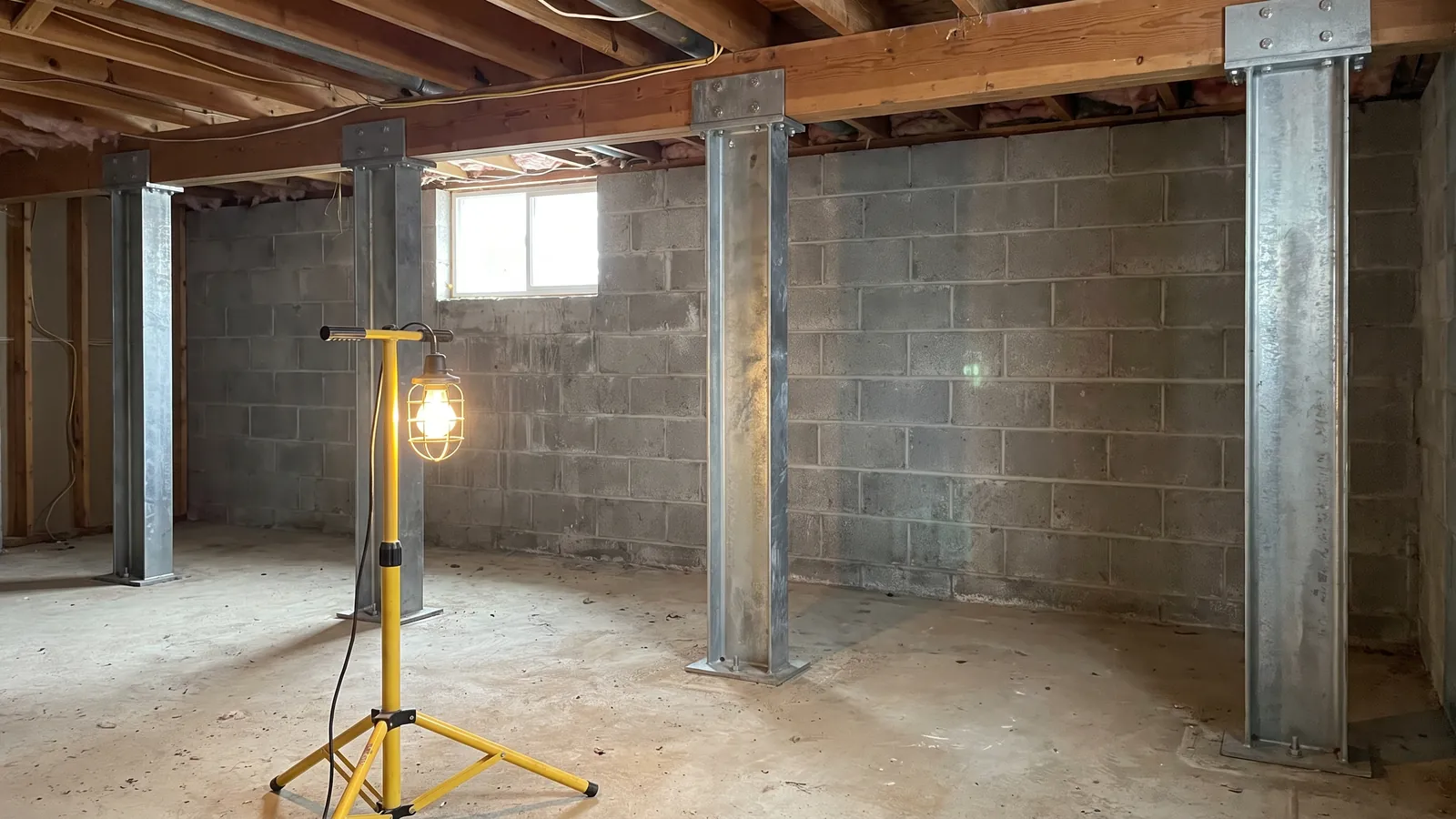
Piers for lost support, anchors or beams for wall pressure, posts and girders for sagging framing, drainage where water is the driver.
Depth recorded on every pier
On karst the depth to good bearing changes from one corner to the next, so each pier's depth and load go into your paperwork.
Permit and locate handled
City permit posted for structural work inside Bowling Green, and a Kentucky 811 locate requested before any digging.
Insured crews
The crews who install the repair carry general liability and workers' compensation, and the certificate is yours for the asking.
Honest about what to leave
Hairline shrinkage cracks and old, stable settlement are noted and monitored rather than sold as repairs.
What foundation repair costs around Bowling Green
| Item | Budget range | What moves it |
|---|---|---|
| Typical foundation repair, all types | $2,200 – $8,200 | Fixr national range; average about $5,200 |
| Steel push pier, each | about $1,500 | Projects commonly $9,000 – $15,000 |
| Helical pier, each, installed | about $3,000 | Most houses that need them take 5 – 10 |
| Wall anchors, per foot of wall | $80 – $150 | Set about every 5 ft |
| Crack sealing or epoxy injection | $200 – $1,000 | Per crack, by length and access |
| Carbon fiber wall reinforcement | $4,000 – $12,000 | Per project |
| Foundation inspection | Free | Written plan and prices included |
These ranges come from national cost guides and are here to help you plan. Your own number is written up after the free inspection, with each pier, anchor, post or foot of drain on its own line, and nothing is dug until you approve it.
What this work looks like
Foundation repair: what homeowners ask
What causes foundation problems in Bowling Green?
Mostly clay and water. The red clay subsoil swells when wet and shrinks when dry, and the limestone underneath has cracks and openings that soil can wash into. Add downspouts emptying beside the footing, a wet spring like April 2025, and a house built on block or a crawl space decades ago, and corners start to move.
How do I know if a crack is serious?
Look at width, shape and change. A hairline vertical crack in a poured wall is often shrinkage. A stair-step crack in block, a horizontal crack partway up a basement wall, a crack wider at one end, or anything a coin fits into deserves a look. If it has grown since last year, call. The warning signs guide has a table.
Do piers always fix it?
No. Piers fix a footing that has lost support. They do nothing for a wall pushed in by wet clay or a sagging girder in a crawl space, and they cannot stop water. We recommend piers only where the measurements show a footing has dropped.
Can you lift the house back to level?
Often part of the way, sometimes all of it. Piers and jacks can raise a settled section, but drywall, brick and plumbing have been living with the settlement for years, so we lift as far as the house will tolerate and tell you beforehand what may crack or need adjusting.
How long does a repair take?
A crack injection takes a morning. A run of push piers or a set of wall anchors usually takes two to four days once the permit and the 811 locate are in place. Encapsulation or an interior drain takes a few days, depending on size.
Do you work outside Bowling Green?
Yes, across Warren County and the towns around it: Smiths Grove, Oakland, Alvaton, Woodburn, Glasgow, Cave City, Scottsville, Franklin, Russellville, Auburn, Brownsville and Morgantown. See the service area.